Showing posts with label KFRC. Show all posts

Monday, January 22, 2024

Flour Power (part 2)

Early regional and national flour brands were frequent radio sponsors in the golden era. In a previous post, back in 2007 I wrote up [LINK] the radio contributions of nine brands Light Crust Flour, Hillbilly Flour, Bright Star Flour, Martha White Flour, King Biscuit Flour, Purity Flour, Bewley Flour, Red Star Flour and Mothers Best Flour. Of those only Martha White and Purity Flour still exist. I have found nine more flour brands with interesting roles in radio.

As early as the 1950s the FTC got involved in flour-industry anti-trust issues under the Clayton act. More here. The FTC ordered that Pillsbury divest itself of two competitors it acquired: Ballard & Ballard based in Louisville and Duff's Baking Mix, a division of American Home Foods, based in Hamilton OH. But the march of consolidation barely slowed down. In 2014 Horizon Milling and ConAgra Milling were permitted to merge under the new brand Ardent Mills which controls about 17% of the U.S. flour milling industry. That march of consolidation has further fueled flour's departure from radio advertising making relics of these old programs.

Sperry Flour - General Mills owns the Sperry brand these days. It's rarely used though. The original Sperry Flour Company was from Stockton, CA, founded around 1850. It operated 30-some flour mills around Spokane by 1920. Some of those mills still stand today. Their main product was a fine ground white flour they called "drifting snow flour." In 1929 General Mills bought them out. The mills kept running in Spokane until about 1965.  The buildings themselves were sold to VWR United  in 1966, then ADM in 1981. More here.

In the 1930s Sperry flour began sponsoring some radio programing. The window was short, they'd already been bought by GM. But in 1934 I found a listing for Helen Gladstone of the Sperry Company featured on KMTR. Their sponsorship of Eb and Zeb started as early as 1932, and appear on the same schedule as Helen but on KFOX.  Little is written about Zeb or Eb except that the scripts were written by John Hasty. It's an old fashioned rural comedy mocking the intelligence of country people. Every source I've found listed Shell as the sponsor but the above promo shot has a Sperry flour box on the front and the logo on the back. 

https://jeff560.tripod.com/kgfj.html

The cast get a full listing on the cards which even OTR guides lack: Mrs. (Mother) Pearce, Al Pearce, Cal Pearce, Morey Amsterdam, Mabel Todd, THE THREE CHEERS, E.J. Derry, Jr. Travis B. Hale, Phil Hanna, Yogi Yorgesson, Lord Bilgewater, Hazel Warner, Tony Romano, Bob Lee, Earl Hatch, Jackie Archer, Budd Hatch, Walter Kelsey, Carlyle Bennett, the Eb and Zeb, played by Al Pearce and W.A. Wright respectively. Pearce has a star on the Hollywood walk of fame, having spent time at KFRC starting in 1928. Much of that cast had also been on the NBC Blue Network on the Pearce's The Happy Go Lucky Hour. Mr. Wright is the hardest of them to find, his wife appears in the both the August and February 1929 issues of Radio Life living at 1619 East 87th St. Los Angeles, CA. Then in 1941 W.A. Wright appears as the Vice President of the Fuller, Smith & Ross Advertising Agency. I guess he went straight.

Pillsbury Flour - This company has been around since at least 1869 or so says the official version. It was founded by Charles Alfred Pillsbury and his uncle John S. Pillsbury.  But earlier histories describe Charles becoming the third partner in an existing flour milling company in St. Anthony Falls, MN. So it's more likely that it was rebranded at some point after 1869.

Three different sponsored programs pop up the first is Todays' Children, a well known soap operate sponsored by Pillsbury. That sheet music above is from 1936, and the back even bears the recipe for the pictured wedding cake. The program ran from 1933 to 1938, then got a reboot in 1943 and ran to 1950 with a new cast. Today's Children started as one of three Phillips-created serials which made up the General Mills Hour, with characters and plotslines crossing between them. The three original serials were: Todays Children, The Guiding Light, and Woman In White. Pillsbury sponsored all three of course.

Pillsbury then sponsored Grand Central station, a dramatic program that ran from 1937 to 1954. It culminated in a Grand Central Station Radio Broadcasts LP, with Pillsbury on the back. The announcers were George Baxter, Ken Roberts and Tom Shirley. The programs were narrated by Jack Arthur, Stuart Metz and Alexander Scourby. Roberts started out on WMCA, and you might know him from The Shawow when it ran on Mutual. Scourby pops up on the 1936 CBS radio program Columbia Workshop, which connects the two via Orson Welles.

A third program, the "National Radio Homemakers Club" was heard over CBS starting in 1929. Her two biggest sponsors were Pillsbury flour, and Royal gelatin. The show ran until 1932. I wrote about her career here.

Gold Medal Flour - In 1931 the Washburn Crosby Co. of Minneapolis, MN ran its own radio station which I'll get to in a moment. Washburn was founded by Cadwallader C. Washburn in 1866. The biography doesnt say it but I suspect that he's Welsh with him sharing a first name with Cadwaladr ap Cadwallon was king of Gwynedd.  That's quite a handle. In 1880 his flour took three top prizes and he started using the "Gold Medal" brand as a superlative.

Gold Medal notably sponsored Beams of Heaven with Paul E. Brown on 860 WERD-AM. If you forgot, that is the first black-owned radio station in America. More here. The program was named after Charles Tindley’s song “Beams of Heaven (as I go),” published in 1906.The show's host was Paul E. X. Brown.

Paul E. X. Brown first became an announcer for WERD in 1949. He had previously been the editor of the Prince Hall Masonic Review and a DJ and sports announcer at WEAS. His tenure at WERD was short, as he took a position as chief announcer at WEDR in 1950. He left radio in 1962 for a marking job at coca-cola. He died in 2007 at the age of 96. For more on Mr. Brown You can read the book Black Radio ... Winner Takes All: America's 1St Black DJs by Marsha Washington George.

In 1956 the FCC considered an incident of competing broadcast applications. [SOURCE] It involved  WERD, WDMG and WAMI. But as a bonus they delved deep into the programming content of WERG on page 716. I am going to gratuitously quote an entire paragraph below. From it we learn that Beams of Heaven ran for 30 minutes 5 days a week playing gospel records.

"Musical programs proposed by WERD include the "Graham Jackson Show," 9:30 to 10:00 a.m. Monday through Saturday, which will feature semi-classical and popular music played by the Staff Organist, together with guest appearances of musicians and vocalists from educational institutions and the community-at-large. "Sweet Chariot," a recorded program of religious music which has been requested by the listening audience. "Beams of Heaven," 11:30 to 12:00 noon Monday through Friday, will feature one-half hour of the best recorded gospel music. "Gospel Train," 3:00 to 4:00 p.m. Monday through Friday, will present a full hour of recorded songs of faith and worship, and will feature spirituals, gospel and sacred songs. "Old Ship of Zion," 5:30 to 6:30 p.m. Monday through Friday, will present one-half hour of the best recorded religious music."

Gold Medal also sponsored the Betty Crocker Radio Cooking School. I've made a number of references to Betty Crocker over the years but strangely seem not to have dug into it much except in cases of disambiguation. Gold Medal then operating as Washburn-Crosby flour, bought the failing and ironically named station WLAG in 1924, and renamed it WCCO. The station bore the name "gold medal flour station" on it's letterhead for at least a decade. The radio cooking school had recipe mailings, letters, mail-in tests and you can still find this ephemera today..


Victor Flour -  Crete Mills manufactured Victor Flour. The sponsored Uncle John and Aunt Minerva on 740 KMMJ-AM in Clay Center, Nebraska. A 1929 KMMJ guide describes Uncle John's temper and frequent insults directed at Minerva. [SOURCE]

Strangely their character names pop up in many places . There's an Uncle John and an Aunt Minerva in the 1943 comedy film So's Your Uncle. But Don Woods and Billie Burkes bear no resemblance to the above persons. There was also a pair of gospel composers “Uncle Wallace” and “Aunt Minerva” who may have had their names misappropriated. Details on their career are scarce, a few newspaper references in the Barnard Bee, and the Variety Radio Directory of 1938 both list them at KMMJ. So that's at least a decade on air.


Occident Flour - It looks like Arden Mills still makes unbleached Occident flour in commercial quantities at least. There are 50 lbs bags on some supply websites. But it seems to have also become shorthand for the type of flour used to make pan bread. (the square slices you use to make a sandwich) The image here is from 1939, of the WCCO Radio house band. Old advertisements seem to indicate that Occident Flour was made by the Russell-Miller Milling Company as early as 1911.

The Russell-Miller Milling company was founded in 1882, and operated in Valley City, ND. It relocated to Minneapolis in 1906, growing to become the 4th largest milling company in the U.S. by 1957. I was expecting to find that they were later acquired by Gold Medal but no, in 2012, Miller Milling became a part of the Nisshin Seifun Group of Japan.

How then did they end up sponsoring a program on WCCO, owned by the competition? My best guess is that Gold Medal was happy not to foot the full bill for WCCO's operations so the sales door was open even to competitors. A 1952 State Fair edition of the WCCO news parade Bob DeHaven of "Breakfast with Bob" plugs Occident Cake Mix but I can find no references between the 1939 post card and the 1952 morning program.


Gold Chain - The book The First Generation of Country Music Stars claims that Ernest Tubbs got his start with a flour sponsor.  He recorded a 78 in 1940 with Decco that sold enough to get him a regular slot on KGKO. Afterward Universal Mills sought him out and on air at least he became known as the Golden Chain Troubadour for Golden Chain Flour. He did at least one tour under the flour regime and then left to appear in some Charles Starlet western films in Hollywood.

But there's more of course. They also sponsored the radio show Hackberrry Hotel  which I've also explored in the past. [LINK] Hack Berry & Willie Botts were the main characters  program on KGKO and KXYZ in 1944. A promotional postcard reveals Willie Botts as portrayed by Ben McClesky in blackface. The show continued until 1951 probably making it one of the later programs to do so


Hecker's Flour - sponsored the Bobby Benson radio series in the 1930s. It was broadcast on CBS October 1932 to December of 1936. Then it was carried on the Mutual network June 1949 through June 1955.  I've seen it listed under multiple names: Bobby Benson and the B-Bar-B Riders, Bobby Benson & the H-Bar-O Rangers, and alternately as Bobby Benson and the H-O Rangers. You can see which ones were sponsored by Heckers. The original run of the series was just a 15-minute program, but the shows after 1949 were 30 minutes long.Four different actors played Bobby Benson in the series; Richard Wanamaker, William Halop, Ivan Cury and Clyde Campbell. Of the group, only Halop had much of an acting career. You might recognize him as Bert Munson from the Archie Bunker TV series.

The programs two main sponsors were Hecker H-O Company, and Kraft Foods. Heckers even sponsored Bobby Benson comic books. Don't recognize the Hecker brand? It is a sister brand of Ceresota. This brand was made by Northwest Consolidated Milling Company, which was  acquired by the Standard Milling Company in April 1902, they later changed their name to Uhlmann Company which they still use today

Aunt Jemima's Pancake Flour - I've actually written about this at length before, HERE.  But here I want to talk about the company. You will see in that post a flour sack with the name "The Quaker Oats Company", but other older ads refer to them as Aunt Jemima Mills Co. In 1888, Chris L. Rutt and Charles G. Underwood bought a small flour mill in St. Joseph MO. They operated that company as the Pearl Milling Company initially. In 1889 Rutt copied/stole the Aunt Jemima name and image from a local Vaudeville Act and began using it in advertisements. The Quaker Oats Company purchased the Aunt Jemima Mills Company in 1926, and formally registered the Aunt Jemima trademark in April 1937 but the brand had been already in use for over 50 years!  Their most notable radio contribution was the The Aunt Jemima program on the NBC Red Network back in 1929, that's clearly before the brand change.

But this is where the official history might be lacking. The current owners claim that the Aunt Jemima Mills Co. name was in use 1914–1926. But you can easily find examples as late as 1929, even in legal documents. The official brand change in appears in the 1937 Official Gazette of the United States Patent Office as follows "
120,160 PANCAKE, BUCKWHEAT, CORN AND WHEAT FLOURS. Registered January 15th 1918, Aunt Jemima Mills, Company, St,. Joseph MO, Renewed January 15th 1938, to The Quaker Oats Company, Chicago, IL, A corporation of New Jersey, assignee.
"

Freedom Mills Flour - I never thought I'd find a contemporary example but here it is. Freedom Mills is a local and independent flour mill in Skandia, MI. They advertise pretty regularly with WKQS Sunny 101.9, an Adult Contemporary station based in Marquette. I appreciate the historical continuity of their recipes appearing on the radio station website.  Liberty farms started milling in 2017 and are now available in 50 stores. You can read more here. and here.


Sunday, July 09, 2017

The Jazz Man Radio Show

I read the book Hot Jazz For Sale: Hollywood's Jazz Man Record Shop by Cary Ginell and by page 8, I found myself googling an arcane possibility. The founder of the Jazz Man record shop, Dave Stuart, had hosted a Los Angeles radio program featuring rare records from his private collection. His shop and subsequent record label were  actually named for his on-air name "The Jazz Man." Frustratingly, nowhere in the book does Ginell identify that radio station. I reached out to Mr. Ginell and he responded quickly "No, I could never find a listing for his program. Checked the radio listings in the LA Times, but nothing turned up."

The store was founded in 1939 and it's first address was 8960 Sunset Blvd, West Hollywood, CA 90069, and the book tells me that at that time he lived in nearby Glendale, CA. The Jazz Information newsletter referred to his "daily broadcast" and also let the world know when the shop relocated to 1221 N. Vine street in 1940.  Then in 1941 it moved to 6331 Santa Monica Blvd. Regardless of the moves, Stuart was rooted in LA. So the question becomes... how many radio stations might have been airing jazz daily in and around Hollywood in 1939?

The answer is more than a few. But as you turn the clock back to cusp of 1940, the options thin out.  Dave Stuart recorded some area jazz bands and their discographies bear a lot of call letters. 1940 the Dawn Club (operated by the Yerba Buena Jazz Band) opened near Union Square in San Francisco, at 20 Annie Street. Friday night broadcasts begin on radio KYA hosted by Hal MacIntyre.  In 1942, the same band records five sides at at the studios of KFRC. Disc two of the complete Lu Watters' Yerba Buena Jazz Band Good Times Recordings are all recorded at KYA in August 1942... but those are all San Francisco call letters. They cannot be the home of the Jazz Man radio show.


So who was airing jazz in LA?  The DJ Alex 'Sleepy' Stein, worked at 1250 KFOX in LA, then he started 97.9 KNOB, reputedly the first all-jazz radio station in the world. But KLON didn't debut until 1950, and KNOB not until 1957. Options in 1940 included: 780 KECA-AM, 1360 KGER-AM, 1300 KFAC-AM, 1120 KFSG-AM, 1000 KFVD-AM, 640 KFI-AM, 950 KFWB-AM, 1200 KGFJ-AM, 570 KMTR-AM, 900 KHJ-AM, 1050 KNX-AM, and in nearby Beverly Hills 710 KMPC-AM. But we can whittle that down. KFSG was all religious talk and the big outlets like KFI, KNX and etc. weren't big on leasing time. Then I found a solid reference. [SOURCE] The San Bernadino County Sun lists the program on KMTR in issues from roughly December 22nd, 1939 through February 28th, 1940.
  • KMTR-Jazz Man, San Bernardino County Sun Dec 22 1939
  • KMTR-Jazz Man, San Bernardino County Sun Jan 6, 1940
  • KMTR-Jazz Man, San Bernardino County Sun Jan 12, 1940
  • KMTR-Jazz Man, San Bernardino County Sun Feb 8, 1940
  • KMTR-Jazz Man, San Bernardino County Sun Feb 27, 1940
Once I found a reference, I found it everywhere. The program even appears in Volume 11, issue number 33 of the Movie Radio Guide, published for the week of May 23-29 1942. But there is a problem, it's also on a different station... this time in San Francisco.
  • KSFO-Jazz Man, Oakland Tribune May 12, 1942 
  • KSFO Jazz Man, Santa Cruz Sentinel May 19, 1942
  • KSFO-Jazz Man, Oakland Tribune June 1, 1942
In 1940 the transmitter and Blaw-Knox tower for 560 KSFO-AM was located on an 11-acre complex at Islais Creek on the Bay Shore. (This was also the site of the KWID shortwave transmitter in WWII) The station's studios were in the Palace Hotel at 2 New Montgomery St. in downtown San Francisco. Clearly this must be an unrelated program. But here's the weird thing, it aired at the same time of day as the KMTR program. That mystery, I have not solved.

Thursday, December 12, 2013

Professor Schnitzel Live On Air!

Some coincidences in radioland are just utterly baffling.  There have been two different men who played a character named "Professor Schnitzel" on the radio at different times and places. Both milked a faux Dutch-German accent and behaved like a rural yokel. They have no connection whatsoever and their careers were separated by about 2,800 miles and two decades. There is no reason to think that either was ever aware of the other. One played the character in the late 1920s, on the west coast. The other in the mid-1950s through early 60s in central Pennsylvania. (One could argue that Larry the Cable guy does his own updated version today.)


The first man to portray the character on air was Clarence Coleman. He was a realtor in San Francisco before the great depression.  He created the character "Professor Herman Schnitzel" in 1927 for a bit on the program "Blue Monday Jamboree" which aired  on KFRC-AM. You can see a group photo from the program here.  The program debuted on January 10th 1927 as a 15 minute short and continued to run weekly. It popularity was such that by February it was 2 hours long. They were scrambling for content to fill the time. 

By June of 1930, the program was syndicated across the entire Don Lee Network, and by the end of the year, it was syndicated nationally on CBS. It's emcee was Harrison Holliway. But Clarence Coleman never worked the character into a regular on the Blue Monday Jamboree. Around 1929 he performed the same character on KYA-AM and even the ABC Western Network. More here

The second Professor Schnitzel was played by Theodore L. Rickenbach. He was a Pennsylvania native and grew up in Reading, PA. He did mostly live comedy and is best known for a series of five 45-rpm comedy discs that were recorded for Butch Records from 1961 to 1968. He also did an LP in 1964 that recycles some of that material. You can see his discography here.

Rickenbach started a radio career in 1932 with the program "Schnitz and Earl." Earl was Earl Shappel on WEEU-AM.  In 1950 he changed co-hosts, needing a classic straight-man and the program became "Professor Schnitzel and Al," with co-host Allen Lane on WHUM-AM Radio. They worked 6 days a week, Monday through Saturday starting at 6:00 AM. He died in July of 1969 in his hotel room. More here and here.

Friday, September 14, 2012

Hollywood Walk of Fame: S - Z

At long last this research project has come to an end. I have asked the question repeatedly why these people are famous within radio and the answer appears to be that some of them were not. Though the walk even includes some misspelled names, cartoon characters and animals, there are no erroneous inclusions. There is always a reason, it's just not always apparent, though it is sometimes a parent. No doubt these oddities will spawn many future posts.(and corrections)

Julia Sanderson - Julia Sanderson and her husband Frank Crumit were a comedy and singing duo in 1928 on CBS as the "Singing Sweethearts" even though they were already divorced. In 1930 they started co-hosting a quiz show called "The Battle of the Sexes", which ran 13 years.

Vin Scully
- starting out at WFUV as a student DJ, he graduated and got a job filling in at WTOP. He did well enough there to get a better job doing college football coverage on the CBS Radio Network. He currently does Play-by-play for the Los Angeles Dodgers on KLAC.

Ryan Seacrest
- An internship at WSTR turned into an overnight shift which inexplicably parlayed into a Hollywood career hosting vapid reality TV programs. In 2004 he took over American Top 40 from a retiring Casey Casem, and later that year starting doing "On Air With Ryan Seacrest" mornings on KIIS.

Dinah Shore
- By all reports her radio debut was actually on the Grand Ole Opry on WSM-AM with a Vanderbilt singing troupe. She left for New York and began singing on WNEW. There she sang with Frank Sinatra and for Xavier Cugat which began her recording career.

Ginny Simms
- She was in the Kay Kyser band circa the Kollege of Musical Knowledge. The Ginny Simms show ran from 1941 to 1942 on CBS went thru a couple changes becoming the Purple Heart Show, and Talent Theater around 1945. She sang on many other programs including The Pause That Refreshes, The Bob Burns show, and others.

Penny Singleton
- He fame originate in one character, Blondie of the comic strip of the same name. She played opposite Arthur Lake (as Dagwood) starting in 1939 on their radio show until it ended in 1950. In 1967 she famously led the Rockettes in a strike against Radio City Music Hall.

Red Skelton - His first appearance on the Rudy Valee show was in 1937. the appearance went so well that in 1938 1938, Skelton replaced Red Foley as the host of "Avalon Time" on NBC. He started doing MGM films and did another radio show "The Raleigh Cigarettes Program" starting in 1941. It lasted until 1953. He moved on to a 3-year syndicate deal with Ziv radio. He was inducted into the Radio Hall of Fame in 1994

Smilin' Jack Smith
- (Not to be confused with "Whispering" Jack Smith) He first appeared on KFRC with Anson Weeks and His Hotel Mark Hopkins Orchestra. More radio work followed and he guested on The Kate Smith Show, and The Prudential Hour. Jack got his own radio show in 1945 and it lasted until 1952. He moved into TV afterwards.

Kate Smith
- See previous post here.

Phil Spitalny
- See previous post here.

Hanley Stafford - His most popular role was as Lancelot Higgins on The Baby Snooks Show. He also played parts on several classic programs such as Popeye, Flash Gordon, Calling All Cars, Jungle Jim, and "The Shadow of Fu Manchu."
Jo Stafford

The Real Don Steele - As a Boss Jock he became nationally-known during his run on KHJ which lasted from 1965 to 1973. (He hosted a TV version from 1965 to 1975 on KHJ-TV.) He also spent time on KIQQ, KTNQ, KRLA, KODJ, KCBS-FM and KRTH.

Bill Stern - Known by me only for announcing the nation's "first" remote sports broadcast. He started out doing play-by-play in 1925 on WHAM-AM. Then was hired by NBC Blue in 1937 to host The Colgate Sports Newsreel as well as Friday night boxing on radio. It ran until 1956. He later did sports commentaries for Mutual. He was inducted into the National Radio Hall of Fame in 1988.

Cliffie Stone - See previous post here.

Ezra Stone - His biggest role was as Henry Aldrich in t"The Aldrich Family" which ran 1939-1953. The Aldrich family sketch started out in a stage show, then was reworked to a bit for both Rudy Vallée and Kate Smith's shows. NBC brought it in to develop into a 30 minute program. He went on to direct programs.

Gale Storm - She beat all the odds and won a 1939 "Gateway to Hollywood" radio contest and got a 2-year contract with CBS. She appeared on variety programs like The Pat Boone Chevy Showroom, Lux Radio Theater, Family Theatre, My Little Margie and a number of feature films.

Igor Stravinsky - (There are multiple alternate spellings) I can fine no records of live radio broadcast US performances. His inclusion appears to be dubious.

Alec Templeton - He played with several orchestras and played on piano on The Rudy Vallée Show, The Chase and Sanborn Hour, Kraft Music Hall and The Magic Key of RCA. His own program, Alec Templeton Time ran from 1939 to 1941.

Jay Thomas - Best known for a reoccurring role on Mork & Mindy he started in radio as a high school football announcer. He went on to KPWR, WXLO, WKTU and many others. Billboard magazine like to refer to him as semi-legendary. He now hosts the Jay Thomas Show on XM/Sirius.

Lowell Thomas - In 1930 he became a news commentator with the CBS radio. He switched to NBC and in late 1930 he hosted the first-ever television-news broadcast. He came back to CBS in 1947. He retired in 1976. He was inducted into the National Radio Hall of Fame in 1989.

Bill Thompson - Starting in 1934, he was a regular on Don McNeill's morning show "The Breakfast Club" He was also in the choir on "The Sinclair Weiner Minstrels" in 1937. He was also a regular in the cast of "Fibber McGee and Molly." In the 1950s he was in several episodes of CBS Radio Workshop. He went on to do voice over for Walt Disney cartoons.

Tommy & Betty Lou Riggs - In 1931 Riggs was running a poultry business and Tommy was a pianist-vocalist on WCAE-AM. Then they began doing the Tom and Betty bit together on WCAE's. Tommy voiced both himself and a 7-year old girl... which is creepy. the program moved to KDKA, then WTAM then WLW in 1937. They did a stretch on Rudy Vallée's Royal Gelatin Hour. they also did the Kate Smith Show and were a summer replacement for Burns and Allen in 1942. In 1950 Tommy Riggs and Betty Lou ran for one season on CBS.

Arturo Toscanini - He conducted Operas and led the NBC Symphony Orchestra. In 1963, NBC Radio broadcast a weekly series of programs entitled Toscanini: The Man Behind The Legend, commemorating Toscanini's career. Like Stravinski this is a dubious inclusion. The series was rebroadcast by PBS radio in the late 1970s.

Charlie Tuna - See previous post here.

Lurene Tuttle - Another claimant to the title of "The First Lady of Radio," she was reputed to be appearing in 15 programs a week at her peak. She did play virtually every female character "The Adventures of Sam Spade" in addition to appearing on The Adventures of Ozzie and Harriet, and the Great Gildersleeve. She was in a slew of soap operas, The Red Skelton Show, Hollywood Hotel, The Restless Gun, Dragnet, Lux Radio Theater, The Screen Guild Theater, Suspense... the list seems to go on forever.

Vera Vague - Barbara Jo Allen got her star in the name of a fictional spinster-type character she created and portrayed on radio and in film. After Vera was introduced in 1939 on "NBC Matinee," she became a regular on Bob Hope's show around 1941. In 1937, she had debuted in network radio as Beth Holly on NBC's "One Man's Family." She also did roles in "Death Valley Days," "I Love a Mystery" and others. In 1952, still in the role of Vera, she hosted her own television series "Follow the Leader" on CBS.

Rudy Vallée - See previous post here.

Harry von Zell
- His first radio gig was as an announcer for the Paul Whiteman Orchestra program, then he relocated to New York There he got a job as a CBS staff announcer and announced for Fred Allen, Phil Baker, Eddie Cantor, Eddy Duchin, Ed Wynn and others. He later headlined his own show "The Smiths of Hollywood" which lasted 1946 - 1947.

Mark Wallengren & Kim Amidon
- In 1986, Mark Wallengren and Kim Amidon debuted their new eponymous morning show on KOST. Following a 2007 purchase by Clear Channel Amidon left the show and was replaced. Amidon was last known to be doing fill-ins on KTWV.

Jimmy Wallington
- He was the announcer for several popular NBC radio shows including Carnation Contented Hour, Eddie Cantor, Fred Allen, the Screen Directors Playhouse, Jimmy Durante, The Big Show, and many others. He also announced for Voice of America for years.

Fred Waring
- See previous post here.

Willard Waterman - His biggest role was in replacing Harold Peary as the title character of The Great Gildersleeve from 1950 to 1957. At the same time he had a recurring role as Mr. Merriweather in "The Halls of Ivy." Prior to all that he was on soap operas and a variety show called Chicago Theater of the Air .

Jack Webb - See previous post here.

Orson Welles
- See previous post here.

Paul Whiteman
- He started on the Old Gold Hour in 1930 but Whiteman had several radio shows, including The Philco Hour, Kraft Music Hall, the Chesterfield hour and Paul Whiteman's Musical Varieties on WJZ. He semi-retired in the late 1940s but He continued to perform on air and was also the music director for the ABC Radio Network.

Dick Whittinghill - He spent 30 years as a DJ at KMPC-AM starting in 1950. He also later did a the afternoon drive slot at KPRZ. He had previously DJ'd at AFRN, KPFA in Helena, MT, KIEV and KGFJ.

Tex Williams - His last appearance on radio was by phone from his hospital bed on Bill Aken's radio program "The Country Call Line" two days before he died. He was a western swing musician who had appeared on WSM at the"Grand Ole Opry," "The National Barn Dance" and Gene Autry's Melody Ranch. Williams also hosted his own radio program, "Riverside Rancho" in 1949.

Meredith Willson - A conductor and songwriter who in 1929 became the concert director for radio station KFRC then became the musical director for the NBC radio. He also appeared on on Good News, Maxwell House Coffee Time, Burns and Allen, and The Big Show. He later hosted his own variety show, the Musical revue which ran 1935-1953.

Don Wilson - Probably best remembered as the fat guy who announced on The Jack Benny show. But his career went back further than Benny's. Don started out singing on KFEL-AM in Denver in 1923. He had also been a sportscaster doing the Olympics in 1932. He also announced for Alan Young, Bing Crosby, Ginny Simms, Music by Gershwin and Baby Snooks.

Marie Wilson - Starting on Broadway she gained national prominence playing the lead role of a dumb blonde in My Friend Irma on film, TV and radio. The TV show and the radio show ran concurrently. The radio series ran from 1947 to 1954.

Paul Winchell - A ventriloquist, singer and comedian, whose he had many guest appearances on various radio programs starting in 1936, on Major Bowes' Original Amateur Hour. He had a season as WOR-AM in 1943, then again as 1948 Summer fill-in. He later did voice over on numerous cartoons and had a TV program where the ventriloquist thing makes more sense.

Walter Winchell - See previous post here.

Charles Winninger - A vaudeville actor who got typecast as a a riverboat captain and eventually ended up playing it on the NBC Maxwell House Show Boat program. He also made appearances on Lux Radio Theater.

Ed Wynn - He was the host of The Fire Chief on NBC from 1938 to 1949. In 1933 he founded his own radio network the Amalgamated Broadcasting System, which lasted only five weeks. He moved onto television. Also notable that He was once knocked unconscious by W.C. Fields with a pool stick.

Alan Young - His biggest roles were in television playing Wilbur Post in the television series Mister Ed, and as was the voice of Scrooge McDuck. He actually started out on the CBC in Canada, then in 1944 did a summer fill-in show, The Alan Young Show on NBC which was a hit. It ran for nine years 1944-1949 and then crossed over to television.

Carleton G. Young - He played many roles on may different soap operas such as "The Heinz Magazine of the air." He also played parts in some classic mystery and suspense programs. He played the character Phillip Galt on the suspense series "The Whisperer" in 1951, and "Jim Laughton" in Hollywood Mystery Time.

Robert Young - He always seemed to be playing doctors. He acted in "The Doctor Fights" in 1944, and played ones on TV as well. His biggest roles was as Jim Anderson, in "Father Knows Best" which ran on NBC radio1949 - 1953. Prior to that he acted on the CBS Studio One program, which ran 1947 - 1948 and "Passport for Adams which started back in 1944.

Tuesday, September 11, 2012

Hollywood Walk of Fame: C - G


This is part 2 of the Hollywood Radio Walk of Fame. Like I said this is going to take all week.There are already a surprising number of entrants that come from the Rudy Vallee Fleishman's Yeast Hour, and the Kraft Music Hall. There are more here, and more from the Sealtest Village Store as well. I sense patterns emerging. So on with the big list, we're not even halfway done yet.

Cass Daley - Her career began on stage and went straight into film. She moved into radio by  guesting somewhat regularly in 1944 on The Bob Burns Show on NBC. In 1945, she joined the "The Fitch Bandwagon" program also on NBC. In 1950, she got her own show: The Cass Daley Show. She also did some recordings for AFRS.

Joan Davis - She started in pictures, but became a regular on The Rudy Vallee Show after a successful 1941 appearance.She appeared in sitcoms and The Sealtest Village Store. Starting in 1945 she got to do her own show, Joanie's Tea Room on CBS. She got a second shot at the title in 1949-1950 with Leave It to Joan, filling in for the summer for Lux Radio Theatre. In 1952 she moved to TV with the I love Lucy rip-off, Leave it to Joan.

Dennis Day - His big break was an appearance on the Jack Benny's show in 1939. He was a great mimic and a good tenor vocalist.the two skills parlayed and his own program "A Day in the Life of Dennis Day" ran from 1946 to 1951 on NBC.

Vaughn De Leath - More famous as a vocalist, she also has a claim to the earliest radio music broadcast when she sang on 2XG in the World Tower Building for Lee DeForest. She later operated WDT-AM in New York City. More here.

Rick Dees - He presently has two radio shows "Rick Dees in the Morning" at KHHT-FM, and a Westwood One radio show "The Daily Dees" that appropriately airs daily. Prior to this syndicate hubbub he worked at WXYC-FM, WSGN-FM and WKIX-FM.

Cecil B. DeMille - Famous mostly as a film director, he was also in radio albeit briefly. From 1936 to 1944, he hosted Lux Radio Theater on CBS. He also served on The National Committee for a Free Europe which oversaw the Radio Free Europe service. His inclusion is dubious.

Andy Devine - Andy was an all-purpose side-kick. He played "Jingles", Guy Madison's sidekick in The Adventures of Wild Bill Hickok. He also played the role on TV later.  He guested more than 75 times on Jack Benny's radio show between 1936 and 1942. He moved on from there to TV drama roles.

Morton Downey - This Downey is the senior one not the junior one. He was famed as a singer in his own right. Then in 1930 he opened The Delmonico, a New York Night club where Bill Paley heard him. That's how he ended up singing on WJZ.  He moved from there to the Camel Quarter Hour program in 1932.

Carmen Dragon - He was a conductor and composer. Aside from his recording career he also conducted the Hollywood Bowl Symphony Orchestra on the Standard School Broadcast, a music appreciation program for students. It started in 1928 and ran into the 1970s.

Jessica Dragonette - See previous post here.

Jimmy Durante - See previous post here.

Nelson Eddy- They claim that this singer has appeared on radio over 600 times. The first of these was probably in 1924 at WOO-AM.  In 1936 he hosted The Voice of Firestone and then in 1937 the Vicks Open House. He hosted the Chase and Sanborn Hour from 1937 to 1939 and then the Kraft Music Hall program from 1947 to 1948. Overlapping he also hosted The Electric Hour from 1942 – 1943.

Ralph Edwards - He was a DJ at  KROW-AM while he was in high school then KTAB-AM and KFRC-AM before 1938. then he got a lucky break and became an announcer on CBS for several shows: Major Bowes Amateur Hour  and Fred Allen on Town Hall Tonight. He went into children's shows from there.

Dale Evans - She was the third wife of Roy Rogers who'd started as a Secretary at a small radio station. She sang and worker her way up to winging on the Charlie McCarthy show and the Chase and Sanborn Hour. She started doing cowboy movies after that.

Clifton Fadiman - He was best known for hosting the quiz show, "Information, Please!"  from 1938 to into1948. He did some TV as well but on radio he also hosted 'Keep 'em Rolling, 1941 - 1942" "Words at War" 1944-1945" 'This is Broadway" in 1949, "Monitor" in 1955,  and "Conversation" which fared better lasting 1954 - 1956. 

Douglas Fairbanks, Jr. - He was a regular on Lux Radio Theater, and Screen Director's Playhouse. He also made appearances on Sealtest Variety Theater, the Jack Benny Show, the Gulf Screen Guild show, and others. Honestly he doesn't really measure up to Douglas Fairbanks, Sr.

Frank Fay - His radio resume is very lean. He spent one year on the Jack Haley Show (1937 - 1938) on NBC and maybe one possible appearance on the Rudy Valee show. His inclusion seems bogus.

Fibber & Molly McGee - See Previous posts here.

Jimmy Fidler - He was a gossip columnist with a radio show. His 15-minute NBC radio show, "Hollywood on the Air" ran 1933 to 1950. It's started on NBC and moved to CBS in 1938, then Mutual in 1941. Around through that list again returning to Mutual again in 1947.

Gracie Fields - She is an unusual inclusion as she was not even US-based for most of her career. In 1940 she fled to the USA to avoid being interned as an enemy alien. Her husband was Italian. The BBC gave her her own radio show in 1947 called "Our Gracie's Working Party." It was her only radio gig. 

W. C. Fields - Famous for portraying a misanthropic drunk on film and stage he also portrayed a misanthropic drunk on radio. After an "illness" kept him out of the movies he started guesting on radio programs including The Chase and Sanborn show where he made many appearances. He also guested on Dick Powell's Tuesday Night Party, and was in the Big Broadcast of 1938.

George Fisher - A real radio man with over 30 years at the mic. His resume includes a dozen stations including KFI-AM, KFWB-AM, KNX-AM and KCMJ-FM.

Tennessee Ernie Ford - He began his career as a singer on and announcer at WOPI-AM in Bristol, TN. He hosted "Bar Nothin' Ranch Time" on KXFM-AM and took off, he moved to KXLA in Pasadena shortly thereafter. a guest appearance on Dinner Bell Round Up boosted his singing career so much that he didn't need to go back to radio.

Arlene Francis - Her first big gig was in 1943, hosting the network radio game show Blind Date. It took off and went to TV in 1945. She later had a successful a talk program, "The Arlene Francis Show," on WOR-AM that ran from 1960 to 1984.

Alan Freed - See previous post here.

Jane Froman - She joined Henry Thies' orchestra as a vocalist at WLW-AM in about 1930. She landed her own show afterward Jane Froman and Her Dance Orchestra which ran into the fall of 1932.  In 1933 she relocated to New York City and began appearing on Chesterfield's "Music that Satisfies" program with Bing Crosby. In 1935 she began appearing on the Intimate Revue hosted by Bob Hope. She spent 1937 on the California's Hour and the "The Magic Key of RCA" and The Texaco Star Theatre for another 10 years.

Ed Gardner - See previous post here.

Dave Garroway - He began DJ-ing in the military in 1941 on Honolulu. After WWII ended he became a DJ at WMAQ-AM in Chicago. He was a jazz man all the way hosting several programs: The 11:60 Club, The Dave Garroway Show, and Reserved for Garroway. Billboard polls rated him best DJ in 1948 and 1949. In the 1970s he still had a shift at KFI-AM.

Floyd Gibbons - He was a war correspondent for the Chicago Tribune in WWI and was injured several times and even lost an eye. His fame came as radio commentator and narrator of newsreels. He had his own half-hour new program heard Wednesday nights on the NBC Red Network.

Arthur Godfrey - In 1930 he became a radio announcer for the Baltimore station WFBR-AM, which later changed calls to WJZ. Late that year he relocated to D.C. and became an announcer on WRC-AM. In 1934 he started a morning music show complete with ukulele. He went on to run on his own CBS morning show "Arthur Godfrey Time."

Earl Godwin -  He covered Washington D.C. for NBC's Blue Network popular with politicos and listeners alike. Henry Ford liked him and made him the "Voice of Ford" on the NBC Blue Network into the mid 1940s.

Edwin F. Goldman - A popular bandleader as early as 1937 starting with the Cities Service Program. the program continued to air on the NBC Red Network, then NBC until 1956. He left sometime in the mid 1930s.

Bill Goodwin -  He was the announcer for the Burns and Allen radio program, and then TV program. He announced for the Charlie McCarthy program in 1943, hosted "What's New?" on WJZ-AM. In 19847 he got his own radio show, the Bill Goodwin show on CBS. It lasted 6 months. NBC tried again on television in 1951 with the "New Bill Goodwin show", with more music less comedy.

Gale Gordon - Best known for a reoccurring TV role on The Lucy Show, he also had a bit of radio tenure. He had a reoccurring role on  Fibber McGee and Molly and it's spin-off The Great Gildersleeve. But more notably he was the first actor to play the role of Flash Gordon, way back in 1935.

Freeman Gosden- A wireless operator in the US Navy in WWI, he teamed up with Charles Correll to form the duo that became Amos & Andy. See the Charles Correll post in the first segment here.

Billy Graham - The infamous evangelist operated a weekly radio program broadcast, The Hour of Decision. He hosted the incongruously named 30-minute program for 50 years. ABC carried it to 150 stations in the US. He taped the first episode at 830 WFGM-AM back in in 1950.

Jim Gray - He is a sports caster, I use the present tense because he's still alive. He's been on  ESPN, NBC Sports and CBS Sports and is syndicated by Westwood One. His fame is strongly stilted toward TV sports leaving it a mystery why he's in the category.

Charlotte Greenwood  - She was an actress who had surprise success on radio. The Charlotte Greenwood Show was just supposed to be a a summer fill-in replacement for the Bob Hope Show. It was popular enough to last five years more years.

Tuesday, October 06, 2009

The Goodwill Hour

The Goodwill Hour had nothing to do with Goodwill thrift stores. It has to do with a high-school drop-out, a taxi driver named Lester Kroll. He had two sons and as a handle for his radio program, he combined them and became John J. Anthony.

John J. Anthony was everything Kroll was not. John had three university degrees, including one from an all-women's college. In 1927, Lester became an announcer and a disc Jockey. But it was John who started the Goodwill Hour. It began in 1932 as a 30-minute talk program, possibly  the first advice program of any kind. He offered advice and counseling on domestic problems. It was loosely based on a radio show called the Goodwill Court. (which I'll cover another day.) WMRJ-AM closed it's doors in 1932 forcing Lester to take his show to WGNY-AM.

It's no surprise that The Goodwill Hour moved to WMCA in 1937. They had run the Goodwill Court in the first place. Why not pick up the spin-off? John's ratings took off and his program moved to WOR-AM and was syndicated on the Mutual Network. The program was renamed "John J. Anthony Hour." He moved out to California and continued the program out of KFRC-AM in San Francisco until 1953. The program was a dramatic favorite with an audience primarily of women. Hooper consistently gave it a 2.5 rating. Callers admitted to infidelity, the urge to kill people and even that they had killed people. No names were ever used. He did milk the success of the program to write a marriage help book... Ironically he was a divorcee who'd once been jailed for failure to pay child-support. He died in 1970.

Friday, September 19, 2008

C.P. MacGregor & Sollie & Ingram

There are some unknowns in my tale of C.P. MacGregor. But he was one of those unseen hands in early radio, that was everywhere. He produced radio programs, recorded musicians, and syndicated everything. He was known as "the DeMille of the discs."

Records tell me that he was the San Francisco branch manager of Brunswick records in 1924. There is some debate if this is the same C.P. MacGregor... Due to the location, and the experience curve I'm going to make the assumption that it is. Every incarnation of the MacGregor company was in this region, and it just makes sense.

MacGregor was a prolific producer and distributor syndicated transcription discs. He did the Shadow, Cecil and Sally Eps, AFRS programs, Al Jolson, Jubilee, Lux Radio theatre, The Hollywood Theatre, Eb and Zeb, and sessions with Leadbelly, Charlie Parker, Stan Kenton... hundreds of others. There is no end to the catalogs if you Google his name. the predecessor to Capitol Records, Liberty records recorded in their studios in the 1940s.

In the book On The Air, John Dunning wrote:
"He argued that transcriptions enabled him to produce flawless shows, losing the excitement of live performance was a small price to pay."
The first of his companies, MacGregor and Ingram Co. was incorporated about 1929. Some of their records of this era bear the call letters of KFRC-AM. That's 610 in San Francisco and they were a customer at least as early as 1932.  Interestingly, The KFRC Anson Weeks program with Walter Bunker, Jr. announcing were all recorded at CPM demonstrating a strong business connection. In that year the company changed its name to MacGregor & Sollie, indicating a change of partners. That incarnation, located on 865 Mission Street, survived until 1937. I have no idea what happened to Mr. Sollie, but C. P. MacGregor continued on solo into the 1970s. I have no proof but I suspect this coincides with his death.

MacGregor & Sollie promoted their San Francisco transcriptions as “Hollywood”-style dramas, capitalizing on the screen backgrounds of veteran actors like Carl Kroenke. stations from coast to coast contracted with MacGregor & Sollie at $17.50 for each episode. By 1945 the C.P. Macgregor studios had moved to a more upscale neighborhood: 729 South Western Avenue, Hollywood, CA. In that era they were using 16" transcription discs.
They had competition of course. Westinghouse was the largest of these. Their World Broadcasting transcriptions are a common sight. WBS discs were pressed on red acetate or vinyl and were more often music programs.

Today the Library of Congress has possession of the MacGregor collection. The surviving masters and recording ledgers of all three companies, MacGregor and Ingram, MacGregor and Sollie, and C. P. MacGregor are at least preserved.

Tuesday, July 18, 2006

The Moose is on The Loose

It is generally written that before Tom Donahue hooked up with KMPX, there was nothing subversive about rock radio. But The Moose, your Captain of the all-night flight, was very real. When some radio people talk about the true beginnings of free-form radio, they talk about the Moose. 


He was a native of Rochester, N.Y. and after three years at WKBW he came to KYA in the Summer of 1962 The Moose worked at KYA on four different occasions, at KSFO three times, KFRC twice, and at KNBR during his career in San Francisco. You can listen to clips here: http://www.bayarearadio.org/audio/kya/index.shtml

When the owner of KYA asked him to be program director, he balked at the Promotion. Vindictively the boss put him on overnights. It went down more like letting a wild lion out of a cage. It was here on the Super Freak 1260 that he flew directly thru the great egress of the 1960s. He rallied the people for protests, for civil rights, and free speech. He praised long hairand drugs and railed against war; all with a timeless blend of silliness, surrealism and cynicism. Every night he played free-form rock 'n' roll and the youth listened.

If there was a record on he didn't like, he'd have his engineer hit a sound-effects cartridge of a bombing attack, and the record would soon grind to a pathetic halt. In a lilting, laughing voice, he got away with sayings like, "May the bird of paradise eat your face completely." He gleefully attacked sponsors. His biggest advertiser was Mayfair supermarkets, which used a jingle sung by "Bob and Penny Mayfair." One night, Syracuse bombed the bouncy couple.

He had an imaginary crew and offered in-flight movies. and at 5:15, he delivered a farm report, doing the voices of Barnyard Benny and Cy Lo. reportedly he did not mave multiple personality disorder.

But behind the Mic, he was a family man. He sold driftwood at a shop on the village fair. He didnt take drugs and did his show hopped up on hot cocoa. He claimed not to ingest anything stronger than a cheeseburger.

On March 27, 1994 the historic KYA call letters disappeared forever, as the call letters were changed to KYCY. [Now KZRZ] http://home.att.net/~musicmann/kya.htm


Friday, May 12, 2006

The RKO Radio Picture

The peak RKO radio station lineup consisted of WOR-AM in New York, KHJ-AM in Los Angeles, KFRC-AM in San Francisco, WHBQ-AM in Memphis, CKLW-AM in Windsor Canada, and the Yankee Network and its flagships WNAC-AM in Boston... (The Canadian government later tightened rules on foreign ownership of radio and television stations, forcing RKO to sell its CKLW-AM to a Canadian-based company in 1970.)

A radio picture? Radio doesn't have pictures, that's the point of radio...
RKO was formed in 1928 as a massive merging of four parties:

1. Keith-Albee-Orpheum (KAO) theater chain
2. Film Booking Office of America (FBO) studio
3. American Pathé film studios
4. Radio Corporation of America (RCA) Photophone division.

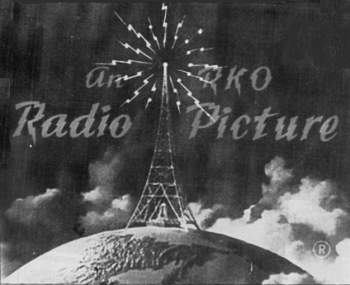
The prominence of the word "radio" in the corporate name reflected RCA's 66% holding. It is claimed that the broadcasting-tower logo of the production arm, "Radio Pictures," was suggested by David Sarnoff himself, but the reference is arcane and unproven.

In 1933 the U.S. Justice Department forced a re-org of RCA, requiring that RCA sell off a portion of it's RKO holdings. This change shifted power to investor Floyd Odlum and the Rockefeller brothers. In 1932 during the height of the great depression it went into debt. A corporate re-organization in 1936 made for a leaner more profitable company.

ten years later Howard Hughes gained control by buying 25% of the outstanding stock. Within weeks of taking control, he dismissed 66% of the staff and as a result production was shut down for six months! Hughs spent the time investigating possibly communists in the filing cabinets and under the carpets. As a reward, In the fifties Hughes got whacked with an anti-trust lawsuit and had to sell off RKO theaters.

With the loss of his theater division, Hughs focused on TWA and his aviation division. It was the Korean war after all. Hughes found the steady stream of lawsuits from RKO's small shareholders pesky. So since he was the worlds richest man, and a nutjob, he bought them all out in 1954. it cost $24 million. then, seemingly on impulse six months later he resold RKO to General Tire for $25 million. We all know what happened to him after that....

General Tire restored RKO's links to broadcasting. They already owned the Yankee network and in 1951 bought General Teleradio. But licensing problems with WNAK and KHJ hampered growth for the next 20 years! 1965-1987. Tt began with a simple license renewal. Fidelity Television claimed RKO General forced it's vendors purchase advertising time on RKO stations. Then the dirt came out from under the carpet: General Tire had bribed foreign officials, they had misappropriated foreign corporate funds, they bribed elected officials, RKO misled advertisers about its ratings, engaged in fraudulent billing, lied to the FCC about a destroyed audit reports and filed false financial statements etc. The FCC considered this gross misconduct. In 1980 the FCC stripped RKO of the two licenses.

In 1987, judge Kuhlmann found RKO unfit to be a broadcast licensee and recommended that the FCC strip RKO of its licenses. Kuhlmann based his ruling on numerous instances of dishonesty by RKO. RKO sold off it's remaining licenses shortly thereafter. Remember back when large corporations used to get punished by the government? Because the governments job was to serve it's citizens? Today I am reminded regularly by headlines that those days are long gone.