

In 1948 Columbia records began marketing the 7-inch, 45-rpm vinyl discs we now refer to as 45s. In that era, they were described as being made of "vinylite." The first 45 rpm record players were actually developed by Philco in 1938; ten years earlier. But a WWII vinyl shortage and continuing success with shellac 78s.
But these were not the first vinyl records. Let's back up. Polyvinyl chloride (PVC) what we call vinyl was first invented in 1838, by Henri Victor Regnault. It was invented again by Eugen Baumann in 1872. Neither ever applied for a patent. So when Emile Berliner invented the record in 1888 and chose to use vulcanized rubber it wasn't because of patent infringement. There were two reasons. PVC is too soft for the mechanical playback devices from that era. Their amplification was powered by friction. In 1913, Friedrich Klatte took did patent PVC but only in Germany. That's all beside the point, it wasn't until 1926 that Waldo L. Semon invented plasticized PVC. This plastic had far greater utility, the Navy began using it as wire insulation. It's only after this date that we can seriously entertain vinyl records.


 Vinyl was initially discovered by was discovered by French physicist Henri Victor Regnault, and it's first practical production process designed by Fritz Klatte (pictured) in 1912. He discovered that the reaction between acetylene and acetic acid could be catalyzed to produced vinyl chloride. This predated it's use in media by such a long period of time that his patent expired in 1925. One year later it was rediscovered by Waldo Semon, who recognized its potential and patented it for the second time. His employers at B.F Goodrich used it for insulation, raincoats, shower curtains and gaskets. More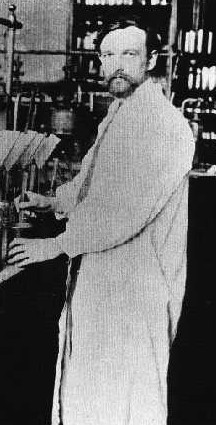

 Posts
Posts


