Showing posts with label columbia records. Show all posts

Friday, March 24, 2017

Behold The RIAA Curve!


The RIAA has a bad reputation. But despite all of the horrible, unethical, hypocritical, soulless, malicious and devious things that RIAA has done... they still deserve credit for the RIAA curve. Prior to 1954, recorded audio had a problem. A world of wholly un-standardized playback and recording  equipment used across independent recording studios, radio studios etc had led to a wild west of audio quality. Differences between needles, reproducers, cartridges, microphones, and recording media made for mixed audio characteristics everywhere. Today the RIAA equalization specification permits longer playback times, and better, more consistent sound quality.  More here.

The RIAA 500R-13.7 equalization curve has operated as a de facto global industry standard for the recording and playback of vinyl records for over half a century. Before 1954 (especially from 1940) each record company applied its own equalization, each pressing plant, and recording studio... it has been estimated that there were over 100 combinations of turnover and roll-off frequencies in use.  (Audacity software actually has a EQ library you can install to emulate the numerous differing curves.) Below are just some of the more common standards.
  • Columbia-78
  • Decca-U.S.
  • London LP
  • BBC 2dB
  • Bartok 629C
  • NBC Ortacoustic
  • NAB/NARTB
  • RCA Orthacoustic
  • Columbia LP
  • Decca-FFRR-78
  • AES

Each EQ curve is a combination of two filter characteristics: a bass boost curve which is defined by a Bass Turnover frequency, and a treble cut curve, defined by a Gain Rolloff parameter. Early 78s, especially in the US had no curve. (Not on purpose anyway). The EQ is flat and to the modern ear it sounds like it. This is unsurprising when you recall that the speed wasn't even consistent between record labels leading to utterly unavoidable differences in pitch. This was exacerbated by excessive patent hoarding wherein each company felt what they were doing used proprietary technology they often wouldn't license.

The earliest EQ standard I know if is the European 78, which dates to at least 1926. It had a pronounced boost in the bass range at 50 Hz. Nearly as old is the Blumlein 300, which has no boost in the high frequencies and a turnover at 300 Hz. It's named for Alan Blumlein a genius electrical and audio engineer at EMI. (He may have also invented stereo sound.)  But these (and many others) had developed for different purposes. The NAB standard was for radio transcriptions. RCA developed a standard for it's "Orthophonic" recordings in 1947 only to change it in 1952 to find a happy medium to pair with their new 45 rpm recordings.  More here.

The NAB standard was probably key to the later standards. The lateral cut NAB curve was remarkably similar to the NBC Orthacoustic curve. They were both boosting low frequencies not for mathematical reasons but to over equipment hum. When the Columbia LP was released in June 1948, it's EQ drew heavily on the former and used a bit more bass boost. The took the unusual step of publishing the information. AES followed suit in 1951 with the explicit goal of standardizing home stereo systems. But RCA and Columbia were adhering to dissimilar standards and it went nowhere.

Then in 1952 RCA published their EQ standard, with an article by R.C. Moyer claiming a technical lineage back to the Western Electric "rubber line" recorder in 1925. This argument was clearly intended to establish theirs as a "historical" standard. That Western Electric Rubber line was a magnetic disc cutter to which we can attribute the birth of EQ. It was a well engineered cutter, and maintained a constant velocity. This allowed engineers to detect a correlation to amplitude and frequency. So with the goal of avoiding amplitude distortion bass was boosted after recording the first deliberate EQ manipulation. This is credited to Joseph P. Maxwell and Henry C. Harrison of Bell Labs.


Then in July of 1954, the Engineering Committee of the RIAA published the RCA standard attempting to standardize all their member labels. Electronic Industries and Tele-tech magazine published a rebuttal claiming it was the same as the NARTB standard, an update of the NAB curve. This was not exactly true. But in reality the Columbia, RCA and RIAA curves were all similar by this time [What's a couple kHz between friends?] If anything the RIAA closed the gap between the other standards, a political decision as much as an engineering decision, but all three standards (RCA, Columbia, and NARTB) were totally workable. It was more important at that time to pick one and move forward.


Monday, October 08, 2012

Howard H. Scott - RIP


A moment of silence please. Another anonymous man who changed our lives has died. Were it not for WWII Scott probably would have been a career musician. Scott studied at the Eastman School of Music in 1941 and was drafted shortly after starting graduate piano studies at Juilliard. He shipped home in  July of 1946 and was hired by Columbia as a trainee at Columbia Masterworks. He was lucky enough to end up working on their secret LP project under Peter Carl Goldmark along side William Bachman and other heavyweights. It culminated in the debut of the microgroove long play record introduced by Columbia Records in 1948.

In 1930 RCA Victor introduced a long-play record... the lacquer transcription disc. These were 12 inches in diameter, and revolved at 33.3 RPM with narrow tightly spaced grooves. In 1931 they started making them with a plastic called Victrolac which was actually PVC plastic contrary to what some texts claim. Plasticized PVC (vinyl) wasn't invented until 1926, but polystyrene dates back to 1839. These discs were of the much newer PVC. So how did Scott  re-invent the vinyl platter disc 20 years later? What they did was make it better. More here.

Consumer record players of that era couldn't play them. PVC is too soft for phonograph play with a standard steel needle. Even those high end electric players that did spins at 22.3 rpm, didn't do so at an adequately constant speed causing very notable pitch variations. In short, sales sucked and RCA gave up in 1934. Columbia picked up the baton.  By December 1939, Columbia was using 16-inch, 33.3 RPM transcription disc masters for all it's master recordings. They had stretched the disc to hold 15 minutes per side. It doesn't sound like much, but remember an Edison cylinder held just over a minute, and 78s just around 3 minutes. This was four times as long! By 1947 they had squeezed out 22 minutes per side. In 1948, with the variable groove they broke the 30 minute barrier.

Howard H. Scott was only 26 years old at the time and not as technical as the rest of the staff but he was the crucial man in the dubbing process. These first long-play records were spliced together from old 78 rpm and shorter 33.3 rpm masters. This required playing overlapping recordings and toggling the input from turntable to turntable. Scott cued the start and snapped his fingers conducting the technicians manual adjustments. His music education and background made him the ideal man. He went on to be a staff producer at Columbia and later an executive manager at MGM. In the 1990s he worked at Sony overseeing CD transfers. He died on Sept. 22, he was 92. More here.


Tuesday, May 12, 2009

Greatest Hits!

Everyone in Radio rolls their eyes when they get serviced a greatest Hits CD. Usually it has 1 or 2 singles, a couple unreleased cuts then filler. Lots and lots of filler. I recently read a convincing anecdote for the release of the first greatest hits record. It's difficult to certify the claim. Just because I can't find an earlier best of or greatest hits doesn't mean there wasn't' one. "The absence of proof is not proof of absence" as William Cowper once

First of all a greatest hits wasn't possible until the LP. before that it would have to have been a box set of 78s. There was no other long playing format unless you want to get into obscure wire recorders. So with this tidbit we wantonly assume a a fifty year time line that takes us from one seminal greatest hits album to an almost weekly schedule of redundant releases.

So the story goes that in 1956 Johnny Mathis had just signed to Columbia records. He released a series of bland, non-intrusive singles and LPs. Ray Coniff was producing him and together they were pretty deliberately aiming for just being inoffensive background music. Adults bought his albums, but kids bought the singles. 45s were new and very popular with kids at that time. RCA had developed the 45, so Columbia was trying to win kids over to the LP, their innovation.
In 1958 Johnny's Greatest Hits was released on LP. It was the number one selling record for months, it sold half a million copies that year, and stayed on the Billboard top 100 for 490 weeks! (that's over 9 years) In 1959 the magazine identified it was a outright trend. In august of that year the mag claimed that it and the follow up More Johnny's Greatest Hits were the reason that Fats Domino and Elvis had released their greatest hits albums.

Today the Best-of collection is just a cheap release for a label to thrown on the schedule. There's no tour support, no recording budget; just a little remastering and a little work for the art department. Britney Spears dropped her first best-of after only a 6 years in music; The Backstreet Boys did the same after only 8. Hilary Duff not to be under done, released a best-of after only 2 records and zero top-10 singles. Labels blame Walmart and shrinking retail space. I suggest they blame themselves. More here.

Tuesday, April 28, 2009

The mythical LP typewriter key

I had always thought it was a myth. When Columbia Records debuted the vinyl Long Play record they held an international contest to name the format. All submissions were rejected and it was crowned formally with the term it'd held in house informally all along: the LP.
They were unable to patent the format as it contained no new technology, but they could trademark the name LP. So they did. I have written often of the ostentatious platter. Here & here. The story is that in the late 1950s Columbia had the office typewriters re-keyed to have an LP key. I have confirmed this somewhat by the single reference in the book "The Label: the story of Columbia Records" by Gary Marmorstein put it back on the table.

Gary asks the question I have asked myself "Which key was removed to make room for it?"

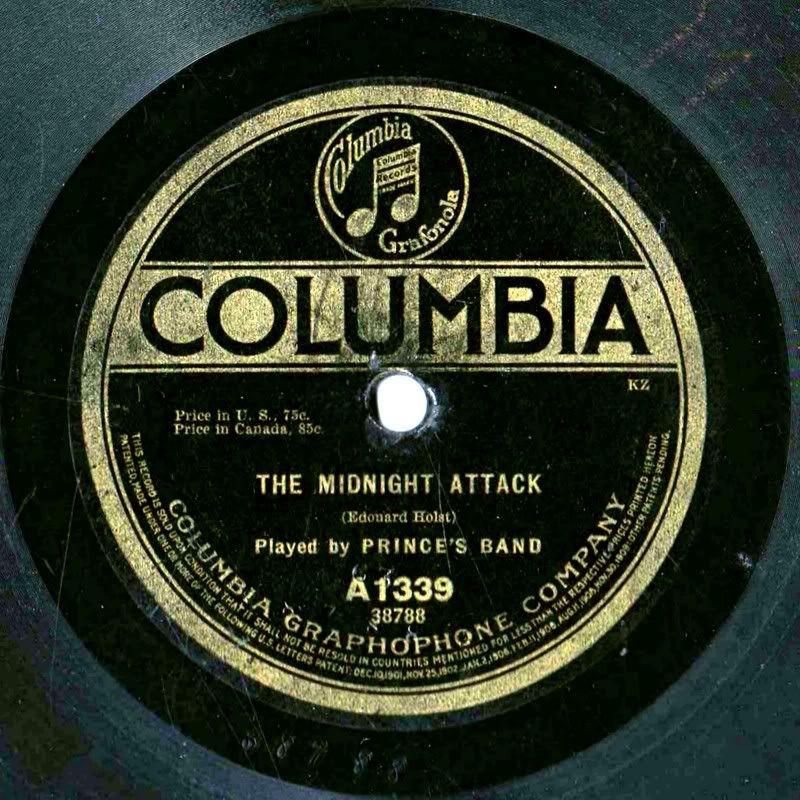
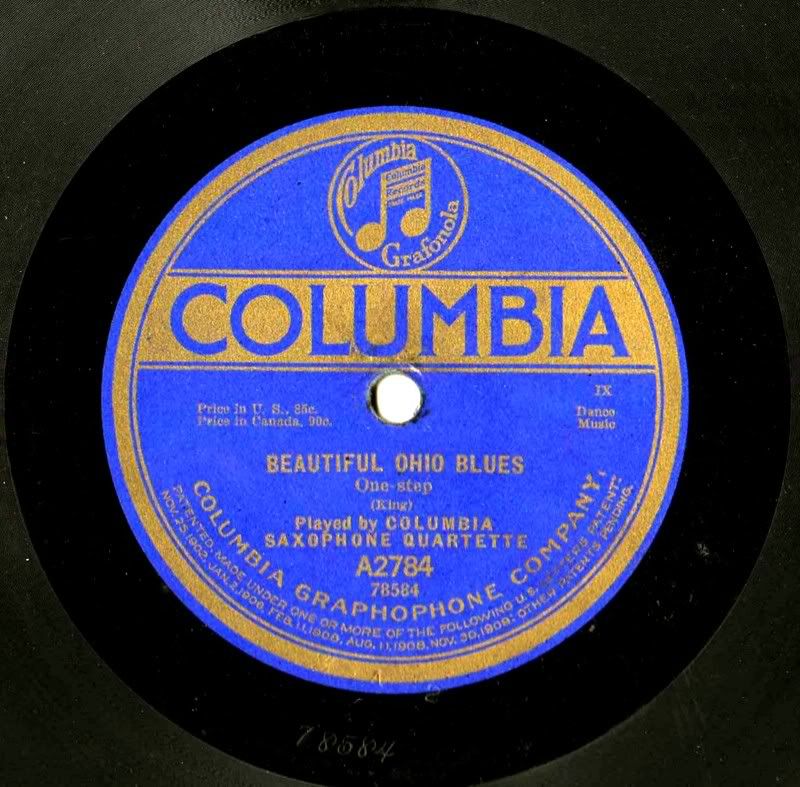
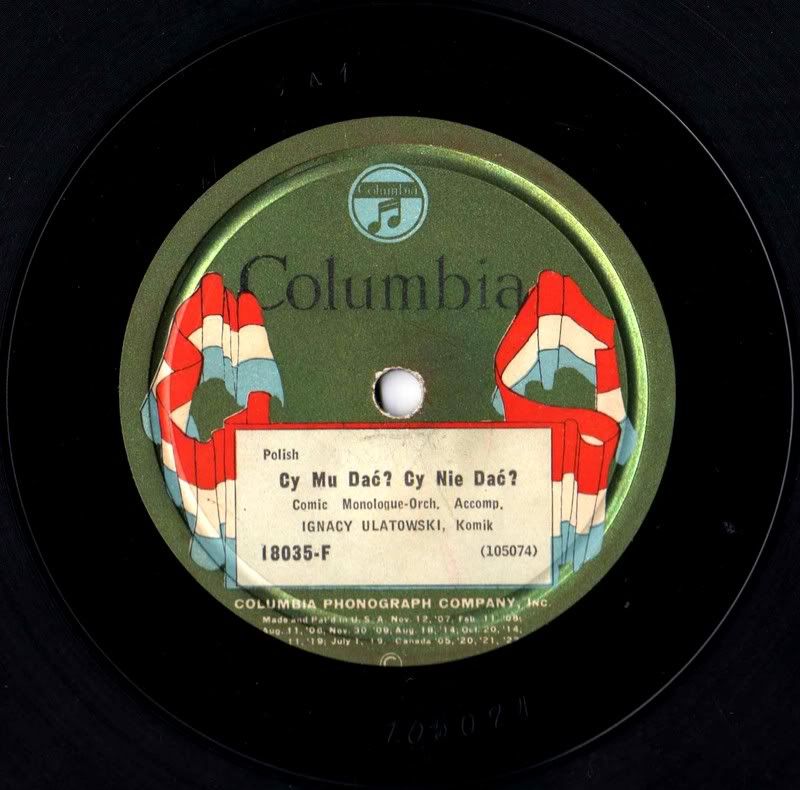
Tuesday, February 19, 2008

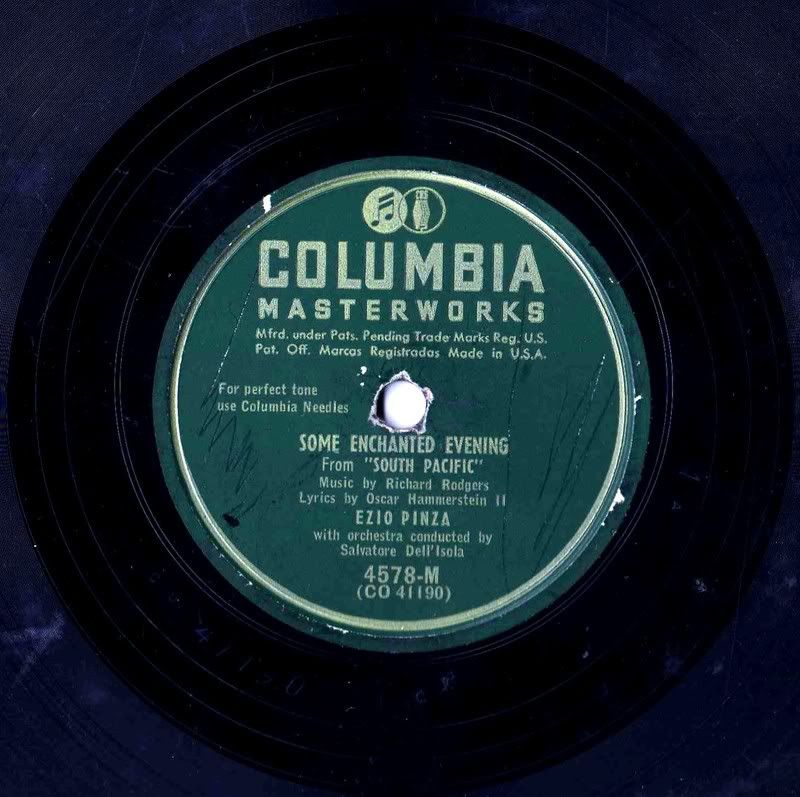
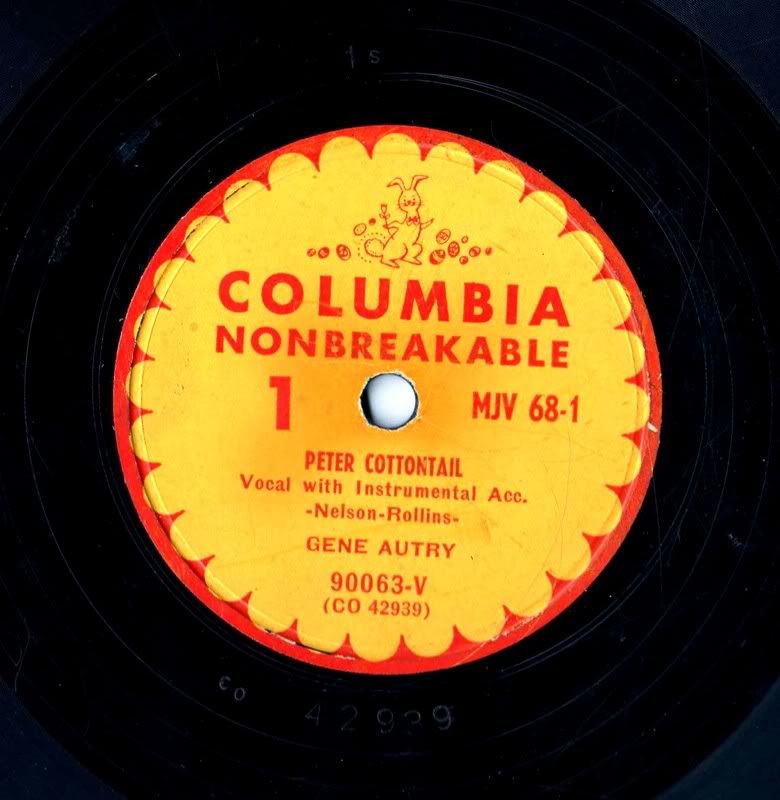
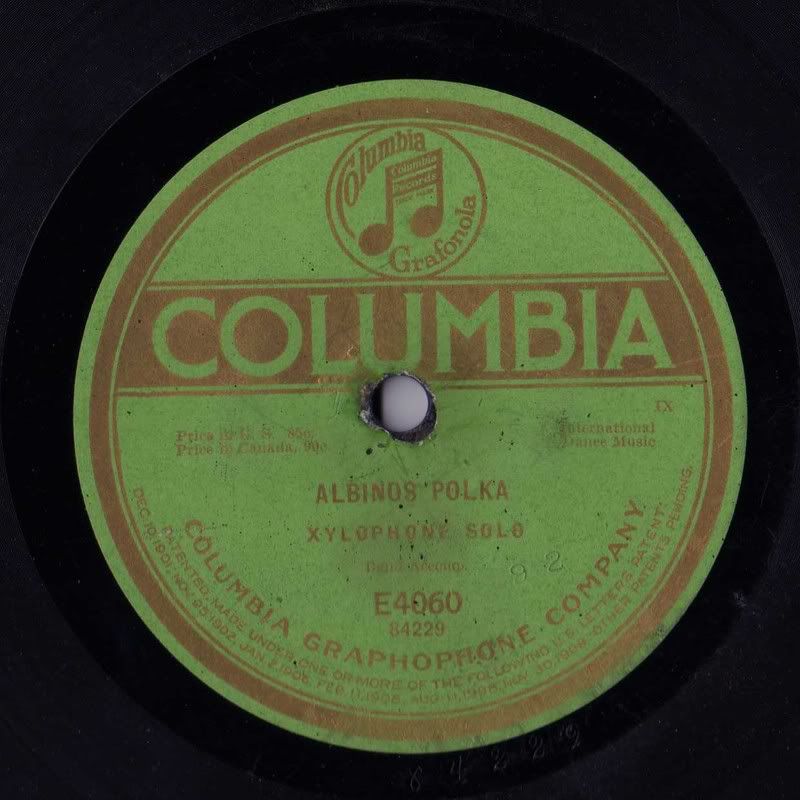
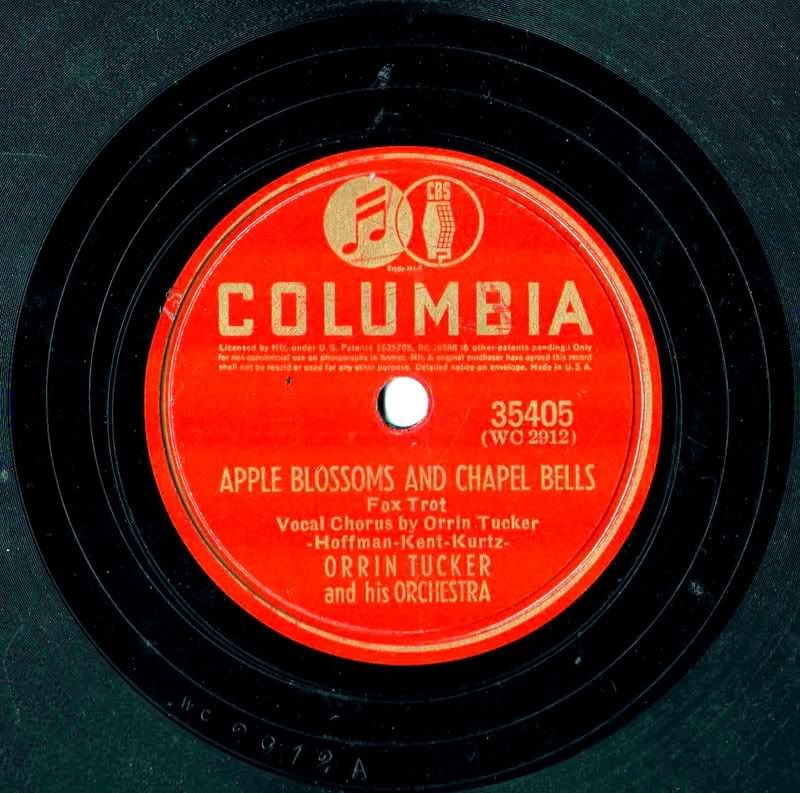
RECORD WEEK Part 2: Columbia

Columbia Records started out as a record distributor for Edison cylinders. They worked in the Maryland-D.D. and Delaware area hence the name. In 1893 they went solo dropping the Edison connection. They began selling platter records alongside the Edison-type cylinders in 1901 competing fiercely with their former partner.As a brand name it was being used as early as 1888. But by 1908 they were driving the industry with their new emphasis on double-sided records. A format we currently take as an assumption. in 1939 they were the first to debut album art. For decades they aggressively purchased competing labels maintaining a centuries long dominance on radio programming and culture. It's hard to overstate the significance of Columbia records. Being one of the first labels it was their successes that spelled out the how-to instructions to both their competitors and labels that were yet to exist. they fell behind somewhat in the 1950s where they spurned rock n' roll needlessly for a couple decades but eventually they caught on and used their expertise to again dominate the industry. CEOs like Bill Paley, Clive Davis, Ed Wallerstien and others were the mold for what a label head should be: pushy, domineering, but with an ear for what worked on radio.