Yes, Even the United Nations have radio stations. Seems counter intuitive since they are not a nation of any kind. So where did they put it?

The United Nations Radio programs are carried on short-wave, distributed by satellite and broadcast by national and regional radio networks in most parts of the world. Information about United Nations Radio, the short-wave broadcast schedule and about partner radio stations in different regions and other production languages can be obtained from the Audio-Visual Promotion and Distribution Unit (AVPDU): fax (212)-963-6869, telephone (212)-963-1807.
 In 1946, the United Nations was mandated to disseminate information on radio broadcasts. Since then the United Nations has been continually produced radio programmes. At this time they produce 29 weekly and monthly radio programs in 15 languages. these are broadcast in 180 countries and territories.
These programs vary in length and style and cover a wide range of issues. Some are traditional News casts others are more like documentaries. These radio programmes are available in cassette and are accompanied by a script or blurb to radio broadcasters only.
For the life of me I cant find a list of the damn stations anywhere just jpegs of hard to read QSL cards. If I get something specific, I'll update this post.


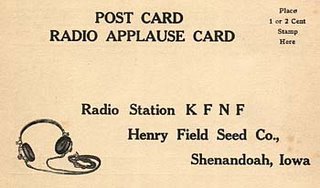 In the mid-1920s the first AM stations were just getting established. At the same time, large radio corporations started experimenting with shortwave stations. The hams using shortwave had a goot notion of who was listening via return transmissions. But these BCB stations never knew who was listening.
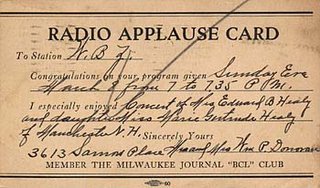 Applause cards were basically postcards with pre-printed lines for certain programs and other station specific data. Some cards also contained space to list the listeners equipment and reception quality. There were many sources of applause cards. Some listeners printed their own. Some companies printed generic applause cards. a number of radio equipment companies were known to use them for promotional purposes.
 Posts
Posts


