

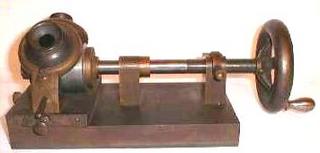
The earliest surviving recordings of a radio signal are segments of Morse code transmissions recorded 1914 by Charles Apgar, a New Jersey radio ham. He fitted the electrical element of a headphone to a home-made recording head he attatched to an Edison cylinder phonograph. This Rube-Goldberg device allowed him to record radio signals picked up by his receiver on wax cylinders. He made at least a dozen such recordings before 1915.
Some of these led to the discovery of high-speed coded messages being transmitted by German spies thru the Telefunken wireless station at Sayville, Long Island!
Other recordings made by Apgar were more pedestrian. He mostly recorded Morse code news bulletins from WHB in Manhattan. Apgar's original wax cylinders are long since lost; but somce samples of his recordings survive. These still exist in yet another aircheck. Apgar made an appearance on station WJZ in New York in 1934. These airchecks of airchecks are owned by the Antique Wireless Association, and a tape copy is in the Library of Congress.
More here: http://telefunken.8k.com/spies.htm
The art of hom-brew aircheks continued Sporadically until 1921 when the Brunswick-Balke-Collender Company and the Victor Talking Machine Company bregan making regular broadcast recordings. Documentation exists for many of these. Sadly nothing survives of these or any of the other experimental recordings thru 1922. Some of their recordings from 1925 are known to exist.
By 1928 a number of big events: presidential speeches, Public safty tests, anniversary broadacasts etc are recorded. Without getting into rediculous details, these include WOR, WJZ, WEAF, WRC, WMAQ CKAC a few NBC network events and some lesser known shortwave stations. Aircheck recording increases in popularity in the late 20s into the early 30's leaving us with recording of figures like Colonel Lindbergh, Grantland Rice, King George V and others.
By 1935 NBC was using acetate discs to record and archive programming for later use. The other big networks jumped on board shortly thereafter.



 Posts
Posts


