Showing posts with label ARRL. Show all posts

Monday, August 04, 2014

ARPSC

The term "ham radio" was originally an insult, like ham-fisted. Around two million people worldwide are "hams" with 700,000 of those being in the U.S.  Technically, all early radio experimenters were in fact amateurs. What makes today's amateurs into Hams was WWI. Their radio broadcasting was suspended in 1917, and restored in 1919. This process was re-played in WWI. But in some ways it was that cessation and rebooting that codified what was ham and what was commercial by separating the services into casts.

In other ways it was its limited wartime use that let to it's modern function in emergency services. The first edition of the ARRL's (American Radio Relay League) Emergency Communications manual came out in 1940. But this was preceded slightly and less formally by a 1938 article in QST  titled 'When emergency Strikes." These ideas coalesced into formal policy and eventually a body of law. Hence the start of the ARPSC (Amateur Radio Public Service Corps). Their function is as follows:
"[To] maintain and continue to train and educate Amateur radio personnel interested in the advancement of communications and safety of citizenry in whatever systems may be available and in use within the Local, State and Federal Structure of ARES (Amateur Radio Emergency Service) and RACES (Radio Amateur Civil Emergency Services."
But what are they. the 1969 ARRL book describes them as a voluntary organization of licensed amateur radio operators sponsored by the ARRL.  Back then RACES was specifically for "civil defense communications." Some early documents give a dotted line to the Red Cross with reference to a memorandum. But modern versions of that document omit the ARPSC. It appears that in the early 1980s the ARRL quietly subsumed the ARPSC into ARES services. But the nomenclature lived on. There was already 5 decades of inertia behind that acronym.

There are a number of ARPSC groups still left across the country.Most have updated their paperwork to describe a continued connection to ARES, GEMO (Governmental Emergency Management Organization)  EMHSD (Emergency Management and Homeland Security Division) and any other vaguely federal sounding acronyms. they are still all volunteer amateur radio operator organizations committed to providing supplemental emergency communications as they always have.

Friday, November 16, 2007

BOOK WEEK Pt. 5 Cynthia Wall

If I impress on anyone after a week of this topic,l it's that this subgenre really peaked in popularity in the 1920s. Walker A. Tompkins is dead, as are Gerald Breckenridge, John W. Duffield, W. Bert Foster, Elizabeth Dutton Ward and Leslie McFarlane. Each of the notable writers has made their contribution to the cannon and then passed on. If it were not for the ARRL revisiting the genre in the 1990s, I might not have known it existed at all.

I wanted to cover a living writer of juvenile fiction that focused on radio. I was lucky enough to find one, not just still alive, but a contemporary author. I found very little information onlie but caught a lucky break. A single review noted that her brother, Steve Jensen, W6RHM, has been the technical advisor on all the books. The Steve in question is the same Steve Jensen that owns Steve Jensen Consultants. He was easy to find. Steve was kind enough to put me in touch with Cynthia. And she was willing to fill me in on some otherwise unattainable biographical details. Were it not for that, I'd have very litle to tell you today.

There is more than one Cynthia Wall in modern literature. One is an author, consultant and therapist. She writes very dull touchy-feely new age books about "life-enhancement." The other Cynthia Wall, the one we care about writes books about radio for young teenagers and clearly is the superior word smith.

She wrote six books of radio-centric juvenile fiction. The characters Marc Lawrence and Kim Stafford are the focus of each of the books, but are more realistic than many other hams of the older texts. Their lives include amateur radio, but do not necessarily center around it. It makes her story lines much more contemporary than the other writers I've covered this week. She said "I wanted to convey the excitement that young people felt in communicating by radio; no, in that I tried to make them faster-paced, less sexist, and less corny. "

Wall, is not actually an engineer. She has a degree in English from UCLA. She moved to Oregon in 1974 and became a freelancer for local newspapers and writing for magazines. She was a regular contributor for The Community Press in Salem until Gannett sent it to the gallows. (That actually is it's own saga worth reading about here.

In the 1980s ARRL had been re-releasing the Walker Tompkins books. Lenore Jensen, her stepmother, saw an obvious partnership. Cynthia submitted a book proposal for Night Signals, and ARRL responded with a request for a series of four books in the same vein. The series was born. She went on to publish two others with a local publisher Dimi Press. Local artist Sheila Dianne Somerville provided illustrations on most of the series. It's titles are as follows:

Firewatch! - 1993

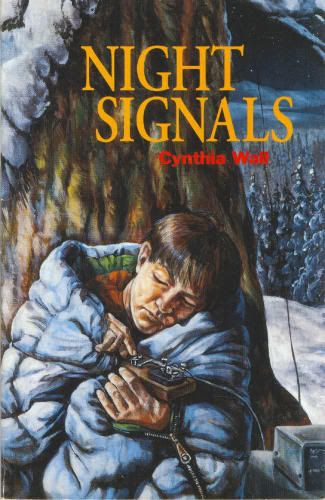
Night Signals - 1990

Easy Target - 1994

Hostage in the Woods - 1992

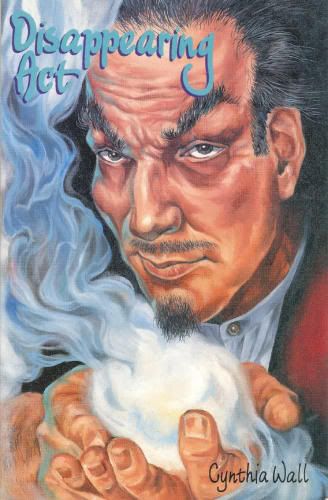
Disappearing Act - 1996
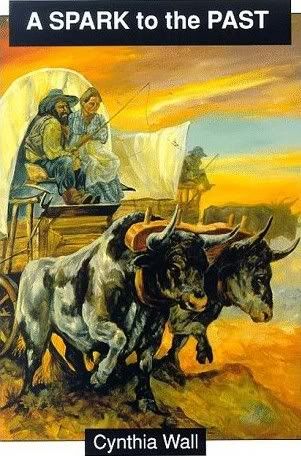
A Spark to the Past - 1998

Cynthia Wall is a ham (of course) uses the call sign KA7ITT. An Oregon group that provides
Recording for the Blind services helped her convert her books to tape. She and Robert Zeida provide voice duties. These are still available from from Handhams.org.

Her cult following is such that her novel "Night Signals" were even translated into Thai courtesy of a request from
Ministry of Education in Thailand. It is also notable that her stepmother, Lenore Jensen was a ham radio amateur (W6NAZ) and helped to start her early interest. during the Vietnam war Lenore ran phone patches from South East Asia to enable soldiers to speak to their families. Cynthia arranged for Worldradio to publish Lenore's autobiography. It's available here.

Thursday, November 15, 2007

BOOK WEEK pt. 4 Tommy Rockford

Walker A. Tompkins may be better known in literary circles for his coverage of the California hills, western history and radio lore and a pretty respectable biography of Roy Rogers. He also wrote some for a few TV series including the Lone Ranger. He's also credited as a screenwriter for the TV series "Death Valley Days." Though I have not confirmed it's the same Tompkins.

He began writing early. At the age of 14 still living in in Turlock, CA, he became a reporter for the Daily Journal. At the age of 21, he sold his first western novel. He traveled broadly in his twenties and eventually settled down in Portland, OR with a day job at the Oregonian Newspaper. he was drafted in WWII where he served as a war correspondent. Upon his return he relocated to Santa Barbara. It was there that he settled in and began cranking out pulp westerns. More here.

In the 1950s he wrote dozens popular juvenile fiction books. But one series in particular was radio-centric. He was the author of the Tommy Rockford series. This series was more hardware savvy then the books of the 1920s. Tommy used a HWA-5400 and had a ham radio in his car. That's pretty flash compared to the spark gap set up the Radio boys had.

I'll quote you a passage of geek-speak to my point:
"From the box he took out his ICOM two-meter rig. Even with only a watt and a half of output power and a "rubber ducky" antenna, K6ATX) believed he might pick up a signal inside a twenty-mile radius of Lee's Ferry. There was nothing more enjoyable then a random ham contact to pass the time. And if he could break a repeater that had 10-meter output capability, it might even be possible to make an overseas DX phone contact."

These books are about a teen age high school student (Tommy Rockford - K6ATX) with a General Class ham license. The series was originally publuished by The Macrae Smith Company. Though some of them were re-released by Sagamore books in 1971. He rewrote the original three with more up to date hardware and re-published them in the mid-1980s through the American Radio Relay League (ARRL).

1. SOS at Midnight - 1957
2. CQ Ghost Ship - 1960

3. DX Brings Danger - 1962

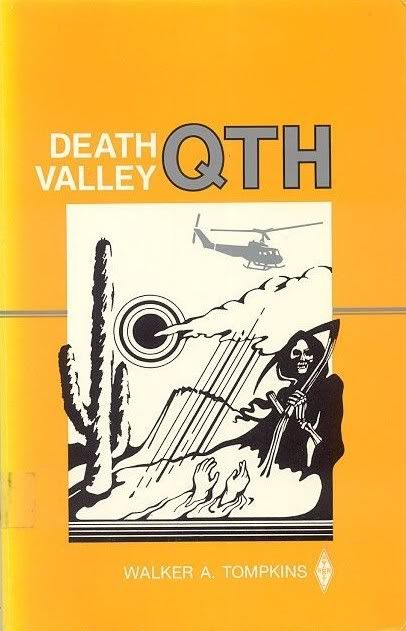
4. Death Valley QTH
-?
5. Murder by QRM -?

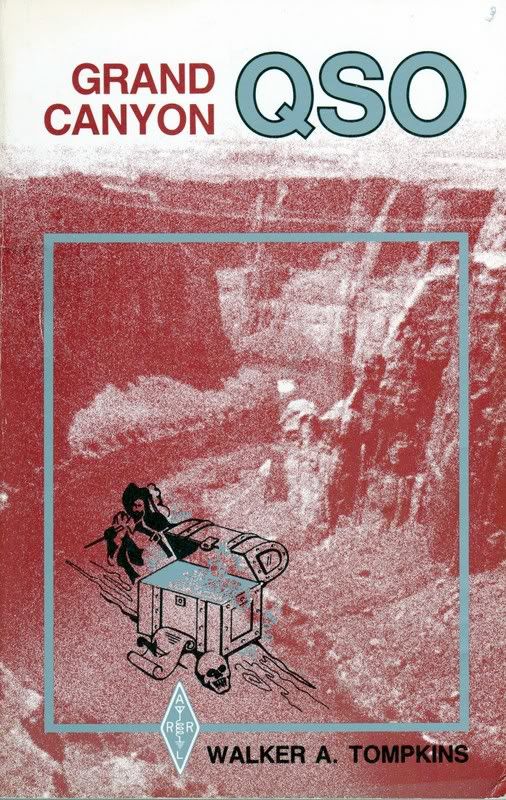
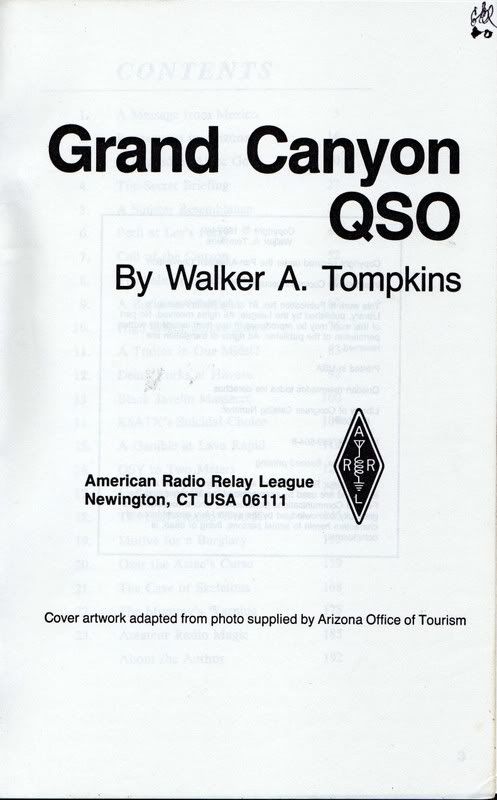
6. Grand Canyon QSO -?

Interestingly enough the same character name was also used in the 1930s by Wild West Weekly. As far as I can tell these are utterly unrelated. Like most radio geeks, he couldn't resist the pull of the studio mic. On a station in Santa Barbara he produced a on going series on local history called "Santa Barbara Yesterdays. " (Anybody know which station?) Walker Tompkins died in Santa Barbara, California on November 24, 1988.

Friday, January 12, 2007

Amateur Radio Plates

This is brilliant. For anywhere from $40 to free a radio ham can get their calls on their license plate. The free structure varies wildy from state to state but is well-documented here by the charming nerds at ARRL.

It's free in Georgia, Alaska, North Dakota, Rhode Island. And the fee averages under ten bucks. Only Kentucky and Wyoming stand alone at thei high end and only New Hanpshire charges based on some weird book value equation.

To receive Amateur Radio plates, a copy of the operator's FCC Amateur Radio Operator's License must accompany the request, and the requestor must state that it is current. Upon revocation, abandonment, or transfer of the license, the plates must immediately be surrendered to the DMV or the transferee. Yadda yadda.

Its written about online everywhere but the best gallery I found was this one:
http://home.twcny.rr.com/nyplates/hamgallery.htm

Wednesday, April 26, 2006

First Ham in Space: W5LFL

In 1965 Owen K. Garriott was one of the first six Astronauts selected by NASA. His first space flight aboard Skylab in 1973 set a new record for time in space. The bar was a littler lower then. they were in space for 60 days, which was double the previous record.

His second space flight was aboard Spacelab-1 in 1983. It was s shorter trip of only 10 days. Over 70 separate experiments were conducted, most of which were for the testing of spacelab-1 itself for research. It was in this ten day window that he operated the world's first Amateur Radio Station from space, W5LFL. This part of the project was called The Shuttle Amateur Radio EXperiment (SAREX.) He accomplished two-way contact with about 350 other hams and also received approximately 10,000 QSL cards from 23 countries. One of these contacts was none other than JY1, operated by King Hussein of Jordan. All audio was recorded by NASA.
Audio posted here: http://www.aa5tb.com/w5lfl.html

His transceiver was hand-built by the Motorola Amateur Radio Club in Florida. His antenna was a directional ring radiator built by hand at Lockheed, which then got the low tech installation of "being taped to a window."

Since then, Ham radio has become an important activity on dozens of successive Shuttle flights, Space Station MIR and the International Space Station. Astronauts who are licensed ham radio operators participate in SAREX during their free time periods allocated to the crew was accepted by NASA.
SAREX is sponsored jointly by the American Radio Relay League (ARRL), the Radio Amateur Satellite Corporation (AMSAT) and NASA. Students and amateur radio operators can attempt to contact astronauts flying on a SAREX mission through voice, packet (computer) radio, or television, depending on what equipment is flying on the shuttle and on what equipment is available on the ground. Info here.