
-James Clerk Maxwell [1853]
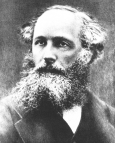 He was a brilliant electromagnetic theorist a apparently very naughty man. Maxwell calculated that the speed of propagation of an electromagnetic field is approximately that of the speed of light. He proposed that the phenomenon of light is therefore an electromagnetic in origin. Because charges can oscillate with any frequency, Maxwell also concluded that visible light forms only a small part of the entire spectrum of possible electromagnetic radiation. (see post on frequency allocations 6/15)
The theoretical basis for the propagation of electromagnetic waves was first described in 1873 by James Maxwell in his paper to the Royal society in London A dynamical theory of the electromagnetic field, which followed his work between 1861 and 1865.
Maxwell had unified the work of previous electromagnetic and optical experiments reducing their results into a set of equations. These equations with his own work have become the basis for transmitting. he produced the actual laws of electromagnetism most importantly electromagnetic radiation. The equations are fundamental to the broadcast of radio and television.
bio here: http://www.phy.hr/~dpaar/fizicari/xmaxwell.html
He was also a notorious late-night carouser. When informed at Cambridge that cumpulsory church services began at 6:00 am he relpied "Aye, I suppose I could stay up that late." Spoken like a true radio man.


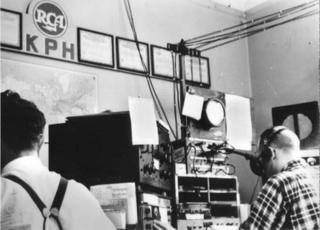 According to the Maritime Radio Historical Society, the station would have been 100 this year. It began in 1905 as Morse station "PH." (Remember back then call letters were voluntary. You could make up anything you wanted.) The call letters referred to the Palace Hotel in San Francisco, where the station was located. Later, regulators later added the K to the call sign. KPH was once known as the "Wireless Giant of the Pacific."
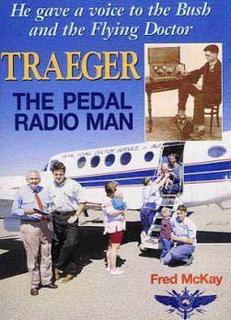

 1. Explain what radio is. Include in your explanation: the differences between broadcast radio and hobby radio, and the differences between broadcasting and two-way communicating. Also discuss broadcast radio and amateur radio call signs and using phonetics.
 Posts
Posts


