Honestly I am not sure I could pass this test. I have sampled some of the questions for the Boy Scouts of America Radio Merit badge exam below. click my header for the full test in PDF or
go here:
http://www.meritbadge.com/mb/093.htm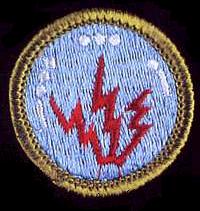 1.
1. Explain what radio is. Include in your explanation: the differences between broadcast radio and hobby radio, and the differences between broadcasting and two-way communicating. Also discuss broadcast radio and amateur radio call signs and using phonetics.
2. Sketch a diagram showing how radio waves travel locally and around the world. How do the broadcast radio stations,
WWV and
WWVH, help determine what you will hear when you listen to a radio?
3. Do the following:
a. Draw a chart of the electromagnetic spectrum covering 100 kilohertz (kHz) to 1000 megahertz (MHz).
b. Label the MF, HF, VHF, UHF, and microwave portions of the spectrum on your diagram. Locate on your chart at least eight radio services such as AM and FM commercial broadcast, CB, television, amateur radio (at least four ham radio bands), and police.
c. Discuss why some radio stations are called DX and others are called local.
d. Explain who the FCC and the ITU are.
4. Explain how radio waves carry information. Include in your explanation: transceiver, transmitter, amplifier, and antenna.
5. Explain to your counselor the safety precautions for working with radio gear, particularly direct current and RF grounding.
6. Do the following:
a. Explain the differences between a block diagram and a schematic diagram.
b. Draw a block diagram that includes a transceiver, amplifier, microphone, antenna, and feedline.
c. Explain the differences between an open circuit, a closed circuit, and a short circuit.
d. Draw eight schematic symbols. Explain what three of the represented parts do. Find three electrical components to match to three of these symbols.
holy frijoles.
I want to meet just one boy scout with this damn badge.


 1. Explain what radio is. Include in your explanation: the differences between broadcast radio and hobby radio, and the differences between broadcasting and two-way communicating. Also discuss broadcast radio and amateur radio call signs and using phonetics.
 Posts
Posts


