

Before the fight even starts. Allow me to define "Loud Speaker"
n. A device for converting electrical energy to sound
Loudspeakers are electro mechanical devices working on the basis of electromagnetism. They convert a given electrical signal, using electromagnetism, into moving air, what we call sound.
Early radio had a problem. Things were quiet. Too quiet as they say in the war movies. Things needed to get louder, not loud enough to rattle your windows with the massive sub-woofer in the trunk, but at least loud enough to hear at all. Radio's did not have amplifiers yet. Everything was operating with an output power measured in milliwatts.
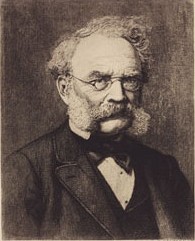
Siemens filed the first significant patent for the loudspeaker horn. It was the predecessor to all acoustic models used in phonographs players. His German patent was granted July 30, 1878 and his British patent No. 4685 was granted Feb. 1, 1878. It was not a patent for audible transmission, it never carried sound. (He tested it wish DC transients.) Alexander G. Bell nailed that with his telephone patent in 1876. What Siemens patented was "the mechanical movement of an electrical coil from electrical currents transmitted through it" A moving coil transducer! and we all know from radio production I class that if the coil moves... it's dynamic.
So in 1874 Ernst W. Siemens was the first to scientifically describe the dynamic transducer, with a circular coil of wire in a magnetic field. His model is suspended so that it can support axial motion (be springy).
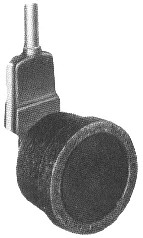
 But what to do with all these moving springs and no sound? Siemens applied for a second German patent, No. 2355, filed Dec. 14, 1877. This one was for a non-magnetic parchment diaphragm as the sound radiator of a moving-coil transducer. His diaphragm had a cone shape, with an exponentially flaring trumpet shape. See picture above.. Many people thought it looked like a daffodil or other flower. Strangely despite the fact that he could plainly see the coil moving, It was the two Americans, Chester W. Rice and Edward W. Kellog, that patented the moving coil principle in 1924.
But like all test models it didn't work so well. It wasn't very responsive. the axial mounting wasn't exactly perfect etc. etc. So this math nerd named Oliver Lodge starting noodling with it. He'd recently decided that math was boring and moved over to chair the physics department at Oxford. During his tine there he conducted experiments in the propagation and reception of electromagnetic waves. It was he that proved in1888 showed that radio-frequency waves could be transmitted along electric wires. It was he that fixed Édouard Branly's "coherer" so that Morse code could even be received. In his spare time he electric spark ignition for the internal combustion engine. Needless to say, he was a bright guy.
Mr. Lodge improved upon the speaker in 1898 with British patent No. 971. He added non-magnetic spacers to keep the air gap between the inner and outer poles of a moving coil transducer. He called it a "bellowing telephone" because of the cone-shape. It's off topic but like many geniuses in his spare time he was also a nutter and a bit of a sun worshipper..



 Posts
Posts


