Showing posts with label KCBS. Show all posts

Tuesday, July 04, 2023

A Leon Russel Bootleg

I recently found a Leon Russel bootleg cassette. Scribbled on the J-card it reads "Live in Los Angeles FM & TV concert." A second line of text dates the recording only to 1970. Am I a Leon Russel fan?  Well I wasn't until I heard this recording. The internet, being a place rich with both filth and folly, has a whole website about LP bootlegs from whence this question came. [SOURCE

The origin turns out to be the Homewood Session recorded at ABC's famous Vine Street Theatre, located at 1615 Vine St. Hollywood, CA. Originally it was the  home of The Don Lee / Mutual Radio Network. Built in 1948 today it's the oldest TV studio in Hollywood. Everything else from the golden era has been torn down. It was home to Los Angeles Channel 2, today that's KCBS-TV but it was first licensed as W6XAO on June 1931. Anyway that went up for sale in 1950 when Don Lee went belly up. [ SOURCE]  Today it's been renamed the Ricardo Montalban Theatre. (He was great in the Wrath of Kahn.)

Anyway Leon Russel's broadcast was on December 5th, 1970 on what was then KCET-TV Los Angeles.  Reportedly it was simulcast on KPPC-FM 106.7 in Pasadena, CA. You can actually watch the whole 58 minute TV broadcast on YouTube today [LINK] It's edited down from a 6-hour session tape.

Alan Baker, the show producer and even Leon Russel have claimed that it was one of the first stereo broadcast. This presents a conflict. American television was not stereo in 1970 or even in the 1980 when this was later rebroadcast. There had however been experimental stereo FM broadcasts earlier. The first true stereo FM broadcast was June 1st, 1961 on WGFM (now WRVE) in Schenectady, NY. So it's not impossible but it requires corroboration. It's worth noting that KPPC was also an early experimenter in quadraphonic broadcasting. Dennis Roger Reed was happy to do describe on the Folkworks website.

"They [KPPC] were the first true progressive "rock" station in Los Angeles, and the first station in Los Angeles to broadcast a stereo simulcast with a television program, providing the audio for a Leon Russell special on LA PBS station KCET. "
The book Superstar in a Masquerade by William Sargent makes a similar statement:

It was aired December 2 on TV station KCET (channel 28) in Los Angeles as the hour-long special "Session: Leon Russel and Friends." in color and, for the first time ever, simulcast in stereo, over radio station KPPC-FM (106.7). The program was presented again the next week, and again during Marsh and April 1971.

But that book was published in 2023 and what's it's source?  There are books today that cite this blog as a source and I'm notoriously unreliable. KPPC was no newcomer, they signed on December 25th, 1924. The calls originally referred to their original owner, the Pasadena Presbyterian Church. KLB was the first station in Pasedena, and there's some debate if KPPC was the 2nd or 3rd depending on if you believe KDYR ever actually broadcast. Pasadena had a population of about 57,000 at the time. Its a wild ride from that starting point and if you really want to dig into KPPC history I do recommend the book Riding on the Ether Express: A Memoir of 1960s Los Angeles, the Rise of KPPC-FM by Dave Pierce. 

This station is 99 years old as of this writing and has a long somewhat confusing history. Forget about KPPC-LP in San Antonio, they're Methodist not Presybterian. Let's start with 1240 KPPC-AM. Back in 1924 is was mostly religious programming.  It's worth noting that the Pasadena Presbyterian Church received the license to build KPPC from the FRC in 1925, but that's after the station had already broadcast the previous December 25th for a Christmas service. Today Santa would put you on the FCC naughty list for that. Thye started on 1310 kHz, and in 1927 began to share time with KELW-AM in Burbank. In 1928 they were moved to 1200 and had to share time with KFWC-AM in San Bernadino. In 1930 they moved to 1210 still sharing with KFWC. In 1936 they bumped up the power to 100 watts still generally a local service. Then came NARBA, under which they and KFXM both moved to 1240 in 1941. 

KPPC was really boxed in with a service that was degraded by it's successive moves. Their signal on 1240 was adjacent to KGFJ-AM on 1230 which operated at 1,000 watts and was only 10 miles away.  Under their share agreement KPPC could only broadcast Sunday nights from 6:00 PM to 12:00 Midnight, and Wednesdays from 7:00 PM to 11:00 PM, it was a mere 23 hours a week. KGFJ for their part had to drop power at night to 100 watts at night from 1947 to 1986 to protect KPPC. It was not a good deal for anyone. Douglas Broadcasting eventually bought the license and shut down KPPC in 1996 to eliminate interference with 1230 KYPA-AM. More here.

The situation was so bad that in 1962 KPPC started an FM station on 106.7. The FCC granted the permit in 1959 and it's worth the read. [SOURCE]  In the document, Edgar Pierce is listed as the "west coast director of a radio and television advertising form" and member of their "radio committee."They kept it vague for some reason but he was the Vice President of Wade Advertising. Ed had a 40-year career in television production, advertising and PR, and was a charter member of the Pacific Pioneer Broadcasters. He's worth googling. In 1967 when they sold the station, most sources refer to him as the General Manager or Station Manager.  He died in 2012. Before you guess it... yes, I do think that Edgar Pierce is also the father of the KPPC DJ Dave Pierce. Last I knew, David was the sales manager at Fox 15/TV in Lafayette, CA. (Again his book Riding on the Ether Express is highly recommended).

So Crosby-Avery Broadcasting buys KPPC AM /FM in 1967, and then in 1969 turns around and sells them both to the National Science Network (NSN) in 1969. NSN struggles to operate the station and in September of 1971, the founder of the NSN Ludwig Frohlich died. In October, Gm Douglas Cox fired the entire 27-person staff and shut off the transmitter, It was a whole event with the staff commandeering the station to broadcast the series of events. [SOURCE]  Frohlich's estate including KPPC AM/FM went to Ingrid and Thomas Burns. In 1973 the two stations part ways with the Burns selling the the FM stick to Burbank broadcasting. It was paired with the former 1500 KBBQ-AM and they became KROQ.

Back to that reliable source question... TV did not start broadcasting in stereo until 1984, so I think we can exclude KCET from this quest. Though ABC did broadcast the Lawrence Welk show in a quasi-stereo format in 1958 by broadcasting separate channels on their AM and TV audio channels that was on ABC affiliates in New York, Detroit, San Francisco, Chicago and Los Angeles.

Could KPPC have been broadcasting in stereo in 1970?  Yes it is possible. ClĂ©ment Ader demonstrated the first two-channel audio system in Paris in 1881. Berthold Laufer for Franz Boaz accidently made stereo recordings on cylinders in 1901. [SOURCE]. Modern stereo broadcasting mostly originates with British engineer Alan Blumlein at EMI in the 1930s. The first stereo In 1962 the BBC began regular experimental radio broadcasts in stereo. [SOURCE]  The Beeb used a Zenith-GE multiplex system. When WGFM did it a year later they weren't even the only one that day. WEFM Chicago (now WUSN) also made an experimental broadcast that day, lagging only because of they are on central time. 

The Leon Russel Session/broadcast occurred between the Crosby sale and the mass firing by the National Science Network. It must have been a chaotic time at KPPC.  They advertised in Billboard that they were boosting the power to 50,000 watts and going stereo as early as 1967. But PD Tom Donahue and GM Milan Melvin were fired and the staff went on strike. Strike news coverage in 1968 report that the station "reversed it's position on going multiplex stereo". The boost to 50,000 watts didn't come until the Fall of 1970, but the stereo audio was delivered in 1968. We can confirm the infrastructure was there. But did they broadcast it in stereo or was a split-channel broadcast as ABC had done 20 years before?

My cassette is of a high enough audio quality I am certain that it was not recorded from the FM broadcast. A tape copy walked out the studio door, it was used to bootleg the vinyl, and my tape is a copy of that vinyl not the broadcast. The Bill Janovitz book Leon Russel: The Master of Space and Time's Journey Through Rock & Roll History does refer to the broadcast briefly:

"The first local screening was simulcast in stereo on KPPC FM, and the newspaper ad includes a helpful chart of how to position your speakers, Leon had resisted invitations to appear on television until he was assured control over every aspect of the production. Getting the right sound was paramount"
That newspaper ad, if it exists, is the proof that it broadcast on 106.7 KPPC-FM in stereo. KROQ will turn 100 next year, sadly Leon Russel died in 2016 and won't be there to see it. I hope they rebroadcast at least a little of the 1970 session. Supposedly there's another 5 hours of tape out there somewhere in the church basement archives, Leon and Furry Lewis rolling tape and getting their drink on.

Tuesday, December 29, 2015

Radio's Greatest Broadcasts

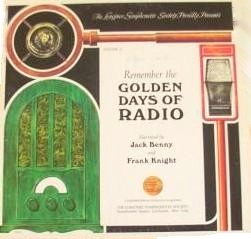
This cassette was released by the The Longines Symphonette Society record label. Nobody seems to know the year of release.  It's listed on Discogs here which proves it exists. The narrator is Frank Knight. As you might imagine I disagree with some of their picks, but the track listing is (supposedly) a list of Radio's Greatest Broadcasts.
     SIDE 1
  1. Introduction
  2. Famous Old Commercials
  3. Jack Armstrong
  4. The Lone Ranger
  5. The Shadow
  6. The Romance Of Helen Trent
  7. Famous Radio Flubs
  8. Pearl Harbor
  9. Manila Is Bombed
  10. VE Day
  11. FDR Dies
  12. Report From Nuremberg
  13. Eddie Fisher Interview
  14. Dempsey-Tunney "Long Count" Fight
  15. Whirlaway Wins The Derby
  16. Schmeling Defeats Louis
  17. Louis Defeats Schmeling
     SIDE 2
  1. John F. Kennedy Assassination
  2. John F. Kennedy Funeral
  3. Robert Kennedy At Democratic National Convention
  4. Robert Kennedy Assassination
  5. Senator Ted Kennedy At St. Patrick's Cathedral
Frank Knight was the voice of the CBS network and he served for 29 years as a newsman at 740 KCBS-AM. Born Frank Dale Leber in 1935, he also worked at XETRA  in the 1960s and actually lived until 2007. Adding his voice to any "best" radio compilation gives it an authentic vintage sound. But that's not the only reason he's on this tape.

Frank was also the announcer for a pre-recorded classical music program called the Longines Symphonette. It's first incarnation aired nightly on the Mutual Broadcasting System from 1943 to 1949. Then it moved to the CBS network until 1957 airing on Sundays at 2:00 PM. It was sponsored for all 14 years by the Longines watch company.  It was popular enough that it had it's own spin-off program "The Longines Choraliers" also on CBS which ran from 1949 to 1955 and also featured the voice of Mr. Knight.

Alan Cartoun the president of the Longines Watch Company, and his son of Fred used that popularity to start a record label based in new Rochelle, NY.  The Longines Symphonette Society specialized in releasing crap. It released recordings of classic radio programs (what we now call OTR) and also theme songs, mood music, tribute bands, and drek compilations by artists like Henry Mancini and the like. The company operated from the late 1960s until 1974 when they sold the business to WMG. It's notoriety probably peaked in 1969 when it was named in a Congressional investigation looking into deceptive marketing practices. More here.

Thursday, November 14, 2013

CLUB HANGOVER BROADCASTS


Club Hangover was the place to be in San Francisco for Dixieland and New Orleans jazz in the 1950s. In that pre-bebop era that's all jazz meant: swing, dixieland and the earliest notions of what we now call traditional jazz. The club opened around 1948 and over the next decade it was home to an unparallelled list of jazz greats: Kid Ory, Cozy Cole, Louis Armstrong, Jimmy Rushing, Earl "Fatha" Hines, Meade Lux Lewis, Muggsy Spanier, Pee Wee Russell, Jack Teagarden and Turk Murphy. Starting in 1955 Hines began a 5 yer stint as the house band for almost 5 years.  The 1958 edition of the Leonard Feather Encyclopedia of Jazz described the venue with the following blurb:
"CLUB HANGOVER, 729 Bush St; GA 1-0743 Open six days a week, closed Sundays. No cover or minimum. Doc Dougherty, manager."

The venue was run by bandleader Charles Alonzo "Doc" Dougherty. Most articles describe him as a bandleader. Jazz was alive on the San Francisco dial in those days. 1400 KRE-AM was airing an all-request jazz program on weekday afternoons. Around 1955 KCBS-AM  began featuring the program "Dixieland Is My Beat" on Saturday nights, plus starting in 1953 they aired a live show from the The Hangover Club each week. The Hangover broadcasts on KCBS were MC'd by Jimmy Lyons. Yes that's the same Lyons that founded the Monterey Jazz Festival. Host Bob Goerner interviewed the musicians from the studio on a dedicated phone line. More here.

So many of these  performances were taped at the hangover Club that most Louis Armstrong Discographies note "probably broadcast" next to tapes known to have come from that venue. KCBS preserved the tapes and DJ Dave Radlauer has cared for a number of these that date to it's heyday from 1954-58. The original host Goerner had been taping them as had Doughtery. But some of those tapes have gone on to have a second life. Goerner began loaning them out for small record labels pressings.

But then in the 1990s Goerner allowed DJ Dave Radlauer to rebroadcast many of them on KALW-FM. After Goerner died his tapes were acquired by the San Francisco Traditional Jazz Foundation and they are now safely in the possession of the Stanford University Braun Music archive.The small club at 729 Bush Street still stands but it's now a gay bar. More here and here

Wednesday, November 28, 2012

The Real Proximate Causation

Not every DJ is remembered, and even fewer in the cannon of legal precedent. The Real Don Steele played a role in a tragic case which led to a notable decision on the issue of proximate causation in tort law.He was also a pretty popular California DJ for about 4 decades. He started DJing at 930 KHJ-AM in 1965 which is all you need to know before reading on...

The California Supreme Court's decision in Weirum v. RKO General, Inc. in 1970 regarded Don Steele's radio show on KHJ-AM. They ran this promotion called "The Super Summer Spectacular." The schtick was that Don himself would drive "a conspicuous red automobile" to a particular area and an announcer would state over the air that Steele was headed to that area. The first person who found Steele (with some conditions) won receive a cash prize. Conditions were pretty simple wearing certain articles of clothing or answering simple questions. Yeah... no way that might go awry...


Subsequently on July 16th  1970, two different teenagers, in two separate cars were tailing Don Steele waiting for the announcement on the air. In their irrational exuberance one imbecile forced another motorist's car off the road, killing him. The victim's family sued everyone, the car manufacturer, the teens and RKO Genera, the owners of KHJ, because this whole stunt was dangerous and amazingly stupid. One teenager settled, but the other teen and RKO were found liable for the accident. The award was 300k, that's over 1.7 million in 2012 dollars. RKO General appealed.

That appeal forced the California Supreme Court to get very specific about liability. They affirmed the jury's verdict that RKO General was legally liable by the reasoning that the contest generated foreseeable risk of harm to the public. they did not say that it was very stupid, but it certainly was. The imbroglio, the court case the the verdict lived on in the cannon of law and Don Steele remained unharmed. Mr. Steele stayed at KHJ until 1973, then moved on to KIQQ, KTNQ, KRLA, KODJ, KCBS and then KRTH in July 1992. He died in 1997 after a truly epic career. 

Wednesday, December 13, 2006

The Mystery Announcer

Frank Knight was a producer at KCBS, and his name back in the day was usually attached to Jack Benny. He was the voice of the the CBS network, But initially he was brought in as a MYSTERY ANNOUNCER... http://members.aol.com/jeff560/cbs.html

It was a clever stunt, one that worked when there were still only half a dozen staitons to listen to. The gig was like this "A new personality will make its debut before the millions of Radio's audience with the opening program in the person of a man whose identity will be concealed behind a black mask and who will be known only as The Voice of Columbia."

The Voice of Columbia was a discovery of Major White's. White was fooling around with a studio mic one night and notice that produce Frank Knight had the pipes for radio. The Major decided that the witty and affable Frankie needed to be moved to the other side of the mic. In the end, the mystery-man gimmick was dropped quickly to little fanfare. The "Voice of Columbia" became simply Frank Knight.

Frank became an archetype of hosting. his ch mature, grave, slow-spoken style and professional look like a doctors, lawyer or bankers was just a part of the golden age of radio. It is emulated to this day.

His voice is on almost every WWII era music collection. If you own a music or radio program collection from WWI or D-Day themed or the semi-famous program Chronoscope, Remember the Golden Days of Radio, Vol. 1 -7 , The Victory Collection or pretty much any live radio revival programs... (Like this one.) You've heard Frank Knight.

Wednesday, February 22, 2006

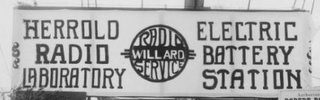
Charles "Doc" Herrold

This was a full decade before Frankie powered up KDKA.


Charles David Herrold of San Jose, California is a relatively unknown broadcasting pioneer whos work began around 1912. He may have been the first to broadcast radio entertainment and information for an audience on a regularly scheduled, pre-announced basis. Over the years he used the call letters FN, 6XE, 6XF and SJN. None of these were formal, legal calls as there was no governing body to assign them. His early broadcasts were very innovative with a great number of "firsts."

Herrod broadcasted using a spark gap transmitter with a carbon element microphone. These elements burned out almost hourly making long form programming very difficult. Through experimentation he invented the "Arc Fone" Basicly it was six arc lights in series which produced a high frequency carrier signal. This unit required 500 volts. So he tapped the san Jose streetcar wires. Then he invented a water cooled microphone, the power of the device burned out the others. The Arc Fone was patented on December 21, 1915. http://users.adams.net/~jfs/herrold3.htm

in 1910 Herrold, published an ad for wireless equipment in the catalogue of the Electro-Importing Company "We have been giving wireless phonograph concerts to amateur men in the Santa Clara Valley." While his 1910 listeners were radio hobbyists, they still listened. he then went on to broadcast to much larger public audiences daily during the 1915 San Francisco World's Fair.

The real significance of Herrold was that between 1912 and 1917 he operated a radio station, programming on a regular schedule. A shceulde that was even announced in the newspapers. It is also noteworthy that the first woman to broadcast was his wife, Sybil. Among the firsts by Herrold was the radio give-away. He awarded weekly prizes to regular listeners. He was also one of the first time brokers, buying time from stations, and then re-selling it to others. At the start of WWI Herrod like almost everyone else was ordered off the air. After the war, Herrold had to rebuild his station to conform with the new standard of broadcasting. In 1921, the Department of Commerce assigned KQW as calls, the station is known today as KCBS-AM, San Francisco.

He died penniless, with almost no recognition; last working as a janitor at a naval facility.

KTEH-TV filmed a documentary of his life. You can order it here: http://www.kteh.org/productions/docs/docherrold.html I plan to.