(NIST) The National Institute of Science & Technology is a federal technology agency that works with American business firms and industry to develop and apply technology, measurements, and standards. Sound vague right? In a nutshell, they measure stuff, and decide how stuff should be measured. Sound kind of small when I describe it like that, but when you realize that they determine standards for a wide range of things such as: the calibration of blood glucometers, standards for police body armor, DNA testing accuracy, proper radiation exposure levels, and even the time stamps of all NASDAQ stock transactions.
What they are most known for is the 1.5 billion times a day that NIST’s Internet Time Service sets and synchronizes computer clocks other networked time-keeping devices. Without which the Internet could not function. i.e This blog would not exist. These three stations are in the two bands the FCC has allocated for "Standard Frequency and time signal" They maintain the standard for frequency and time intervals, setting the official time for the entire United States. On the side they have a program of research and service activities in time and frequency metrology. They are accurate to one millisecond if one corrects for the distance from the station.
In 1923 NIST launched WWV. A sister station, WWVH, was established in 1948 in Hawaii. In 1956, they launched a low-frequency station, WWVB. It offers greater accuracy than the other two it's signal covers most of the North American continent. Their signals include UTC time in both voice and coded form; time intervals and audio tones; information about Atlantic or Pacific storms; geophysical alert data related to radio propagation conditions; and other public service announcements. More here. They also operate a few radio stations:
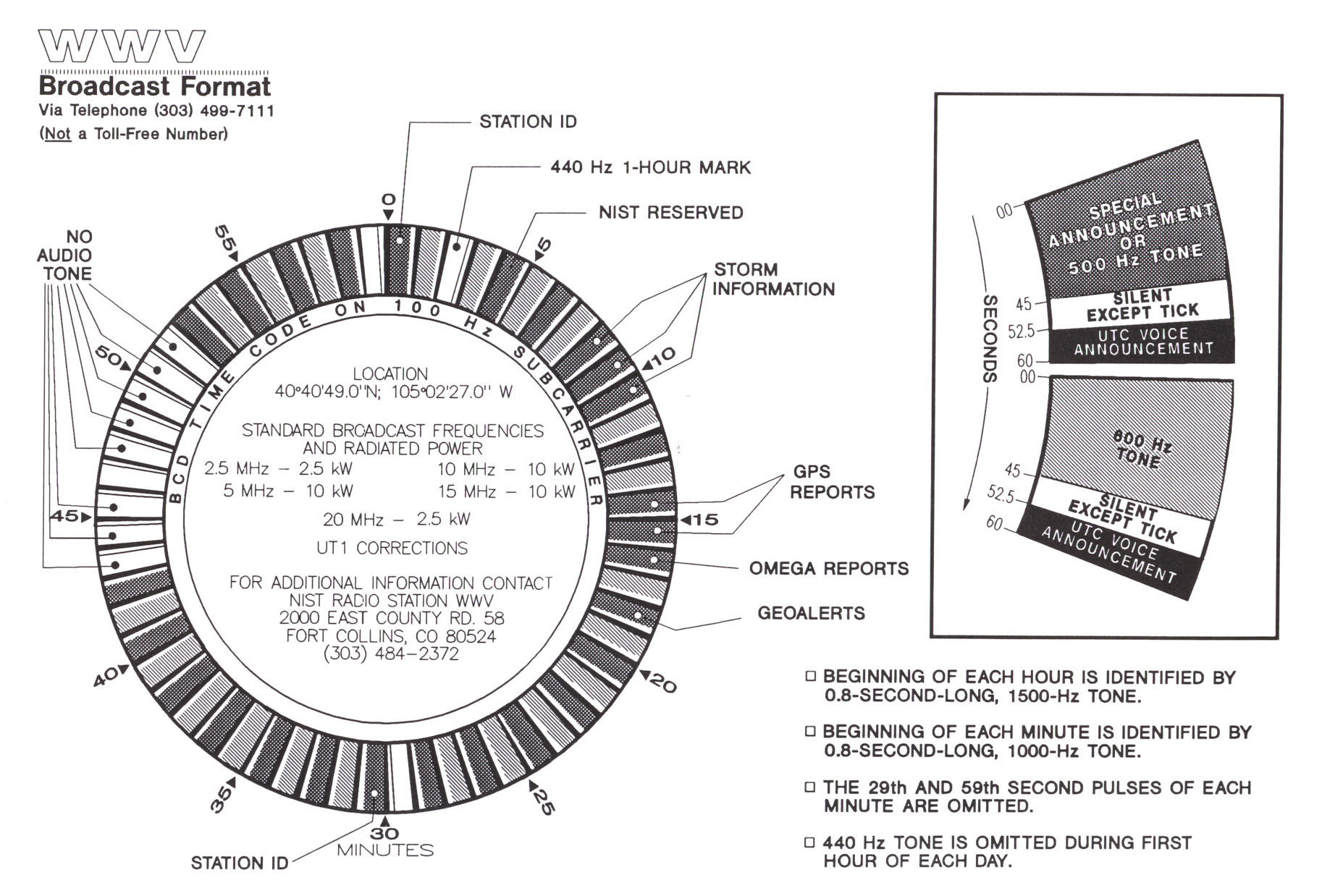
WWV Fort Collins, CO (their signal is also offered by phone: 303-499-7111)
Broadcasting on 2.5 Mhz, 5.0 Mhz, 10 Mhz, 15 Mhz, and 20 Mhz. Schedule Here.
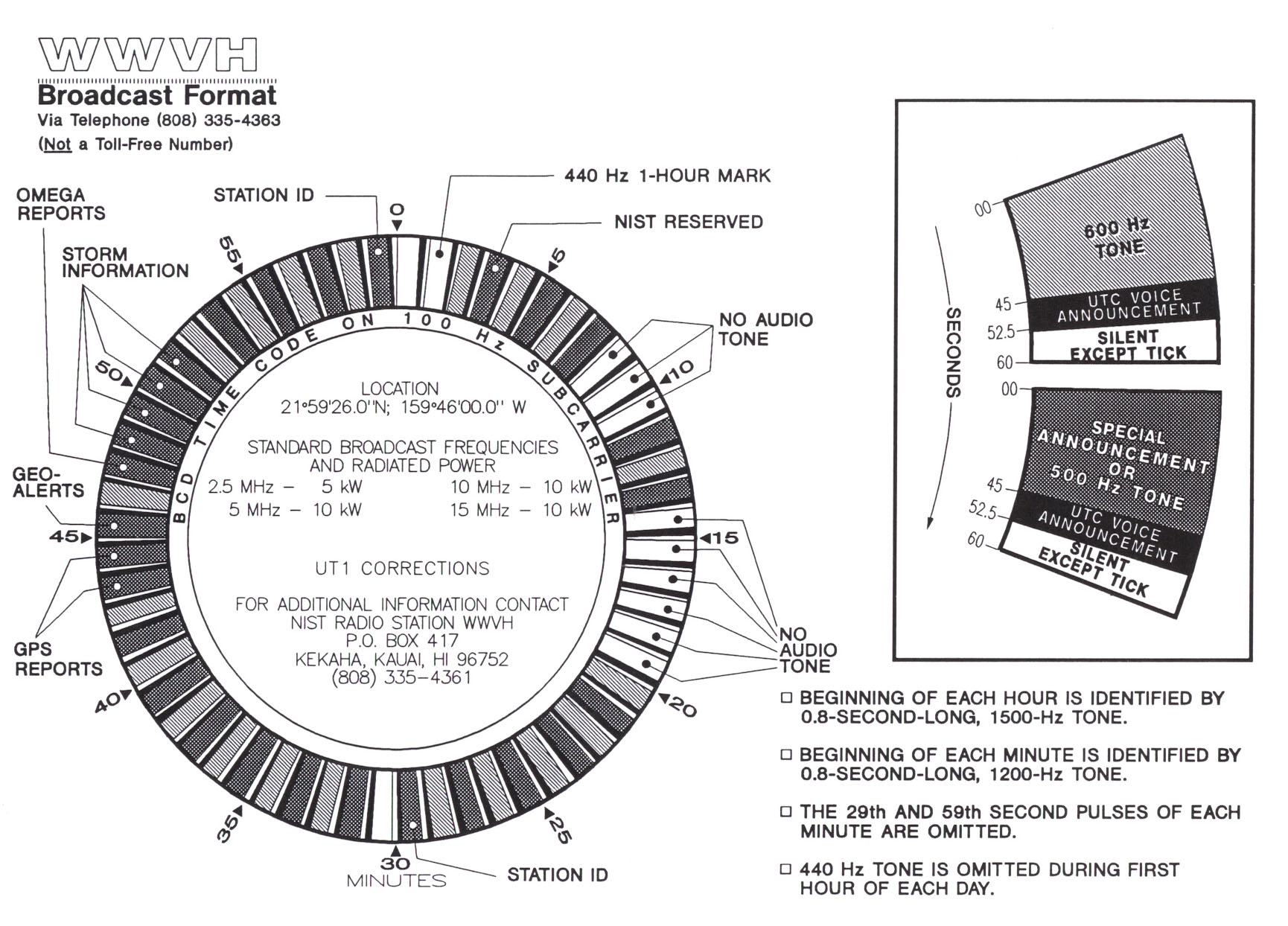
WWVH Kauai, HI (their signal is also offered by phone: 808-335-4363) Broadcasting on 2.5 MHz, 5 Mhz, 10 Mhz, and 15 Mhz. Schedule Here
WWVB Fort Collins, CO Broadcasting on 60 Khz
Official U.S. Government time, as provided by NIST and USNO, is available on the Internet Here.
And Here is a geek who made an antenna to receive WWVB with tin foil and a tomato soup can:
At the beep the time will be 5:38 PM EST...
Showing posts with label WWVH. Show all posts
Friday, March 03, 2006
Monday, August 08, 2005
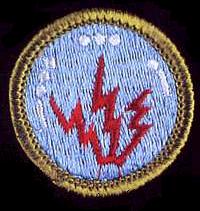
The Radio Merit Badge
Honestly I am not sure I could pass this test. I have sampled some of the questions for the Boy Scouts of America Radio Merit badge exam below. click my header for the full test in PDF or
go here: http://www.meritbadge.com/mb/093.htm
1. Explain what radio is. Include in your explanation: the differences between broadcast radio and hobby radio, and the differences between broadcasting and two-way communicating. Also discuss broadcast radio and amateur radio call signs and using phonetics.
2. Sketch a diagram showing how radio waves travel locally and around the world. How do the broadcast radio stations, WWV and WWVH, help determine what you will hear when you listen to a radio?
3. Do the following:
a. Draw a chart of the electromagnetic spectrum covering 100 kilohertz (kHz) to 1000 megahertz (MHz).
b. Label the MF, HF, VHF, UHF, and microwave portions of the spectrum on your diagram. Locate on your chart at least eight radio services such as AM and FM commercial broadcast, CB, television, amateur radio (at least four ham radio bands), and police.
c. Discuss why some radio stations are called DX and others are called local.
d. Explain who the FCC and the ITU are.
4. Explain how radio waves carry information. Include in your explanation: transceiver, transmitter, amplifier, and antenna.
5. Explain to your counselor the safety precautions for working with radio gear, particularly direct current and RF grounding.
6. Do the following:
a. Explain the differences between a block diagram and a schematic diagram.
b. Draw a block diagram that includes a transceiver, amplifier, microphone, antenna, and feedline.
c. Explain the differences between an open circuit, a closed circuit, and a short circuit.
d. Draw eight schematic symbols. Explain what three of the represented parts do. Find three electrical components to match to three of these symbols.
holy frijoles.
I want to meet just one boy scout with this damn badge.
go here: http://www.meritbadge.com/mb/093.htm
1. Explain what radio is. Include in your explanation: the differences between broadcast radio and hobby radio, and the differences between broadcasting and two-way communicating. Also discuss broadcast radio and amateur radio call signs and using phonetics.2. Sketch a diagram showing how radio waves travel locally and around the world. How do the broadcast radio stations, WWV and WWVH, help determine what you will hear when you listen to a radio?
3. Do the following:
a. Draw a chart of the electromagnetic spectrum covering 100 kilohertz (kHz) to 1000 megahertz (MHz).
b. Label the MF, HF, VHF, UHF, and microwave portions of the spectrum on your diagram. Locate on your chart at least eight radio services such as AM and FM commercial broadcast, CB, television, amateur radio (at least four ham radio bands), and police.
c. Discuss why some radio stations are called DX and others are called local.
d. Explain who the FCC and the ITU are.
4. Explain how radio waves carry information. Include in your explanation: transceiver, transmitter, amplifier, and antenna.
5. Explain to your counselor the safety precautions for working with radio gear, particularly direct current and RF grounding.
6. Do the following:
a. Explain the differences between a block diagram and a schematic diagram.
b. Draw a block diagram that includes a transceiver, amplifier, microphone, antenna, and feedline.
c. Explain the differences between an open circuit, a closed circuit, and a short circuit.
d. Draw eight schematic symbols. Explain what three of the represented parts do. Find three electrical components to match to three of these symbols.
holy frijoles.
I want to meet just one boy scout with this damn badge.
Labels:
boy scouts,
WWVA,
WWVH
Subscribe to:
Posts (Atom)