Hugo Gernsback is one of those names that pops up repeatedly in radio history. His late career success in science fiction overshadowed his snake oil interests in radio and his more bonafide accomplishments like WRNY and Radio News. He is for whom the Hugo awards are named. He foresaw video conferencing, social networking, electrical cars, radar, solar power, and microfilm. He didn't invent science fiction, he was science fiction. But let us discuss his more mortal accomplishments. He built one of the first New York radio stations.. then destroyed it with his own endless tinkering.
In 1925, Hugo founded radio station WRNY which broadcast from the 18th floor of The Roosevelt Hotel in New York City and was later involved in the first television broadcasts. Gernsback savvily used WRNY and his magazine Radio News to cross promote each other. Radio programs on WRNY often were used to discuss articles he had written or published,
and some of the articles in Radio News covered the activities at WRNY. The model was later emulated across the nation by daily newspapers that also owned local radio outlets.
At the time there were only about 500 radio stations in the whole of the USA. WRNY's license was so early, they were pre-FCC, and even pre-FRC. His company, Experimenter Publishing applied for a license from the US Dept of Commerce to broadcast on 1160 kHz in New York City. But they didn't stay there. Before the station closed in 1934 they'd also have broadcast on 800 kHz, 920 kHz, 970 kHz, 1010 kHz, and 1070 kHz. But not all of those moves went so smoothly. In November of 1926, WRNY then operating on 800 kHz moved from the Roosevelt Hotel to Coytesville, New Jersey. WHN, then operating on 830 kHz claimed that WRNY was causing them interference.There wasn't much they could do until the FRC was formed in 1927, whereupon WRNY was reallocated to share time on 920 kHz with WPCH.
By then Gernsback was getting bored with regular old radio. Just for giggles in 1927, Gernsback started the shortwave station 2XAL (later W2XAL) operating on 9700 kHz. Then he got the TV bug. In April 1928,he started a venture with Pilot Electric Manufacturing and began broadcasting television experiments on the AM band. His transmission on 1010 kHz yielded a silent black and white image on a screen 1.5 inches square. It had only 48 scan lines. Impressively that tiny low resolution images could be transmitted in as little as 5 kHz of bandwidth. (For comparison remember that commercial television of the 1940s used 6 MHz of bandwidth.)
The FRC stepped in and stomped on his television dreams. Under the auspices of preventing interference the FRC limited television broadcast to shortwave
stations above 1500 kHz. The experimental broadcasts would be limited to one hour per day and their bandwidth limited to 10 kHz. Oh and they couldn't air them during prime time 6:00 PM to 11:00 PM. The bandwidth limitation was critical. TV experiments were no longer possible on the AM band. In the Spring of 1929 a bankruptcy petition was filed against the Experimenter Publishing Company for debts of over half a million dollars. A trust was established and Hugo was kicked out. His shortwave station W2XAL became property of a flight school and WRNY went to the Curtiss Aircraft Corp. WHN later bought it out and shut it down to end a pesky dayshare arrangement.
Showing posts with label radio news. Show all posts
Monday, July 08, 2013
Monday, December 12, 2011
The Biltmore Agreement
In the early 1930s there was a decline in newspaper revenues. somehow ignoring the Great Depression, newspapers blamed radio. In truth, advertisers were increasingly putting their advertising money into broadcasting. In the same way that Craigslist won the classifieds section from the news paper, radio took news. Radio by virtue of being live, could break a story faster than any print medium. This new dynamic deeply concerned the Associated Press and the United Press because print media were their biggest customers and radio was their newest. Newspapers were pressuring them not to do business with radio stations —in effect asking them to choose between them. In 1933 that actually happened, albeit briefly. Hostilities continued to rise. When CBS asked to be allowed to put a reporter in the congressional press gallery the old newsmen balked. (Radio was kept out until 1939) You can imagine at this climactic precipice, the parties vested on the radio side of things were ready to cut a deal.
On December 11th and 12th of the year 1933, William S. Paley of CBS and David Sarnoff of RCA met at the Biltmore Hotel in New York City with representatives from all the three wire services, ANPA (American Newspaper Publishers Association) and NAB (the National Association of Broacasters). But they could exactly write out a contract, that could be considered restraint of trade. It proceeded as a gentleman's agreement, collusion in other words. The terms were summarized very well in the book Media At War: Radio's Challenge To The Newspapers by Gwenyth L. Jackaway, with I further summarize for brevity below:
That lasted about as long as you'd expect. Local radio stations outside of NAB largely ignored the agreement, and larger network broadcasters felt pressure to compete and bent the rules. Newspapers returned the favor, by refusing to carry news about radio, unless it was slandering radio. That came to an end, only as newspapers discovered it was just easier to buy the radio stations...
On December 11th and 12th of the year 1933, William S. Paley of CBS and David Sarnoff of RCA met at the Biltmore Hotel in New York City with representatives from all the three wire services, ANPA (American Newspaper Publishers Association) and NAB (the National Association of Broacasters). But they could exactly write out a contract, that could be considered restraint of trade. It proceeded as a gentleman's agreement, collusion in other words. The terms were summarized very well in the book Media At War: Radio's Challenge To The Newspapers by Gwenyth L. Jackaway, with I further summarize for brevity below:
- Networks were to cease gathering their own news.
- The wire services would provide service to the PRB (Press Radio Bureau) to edit into announcements for use on radio.
- Radio stations would pay for use of the PRB
- Bulletins could be no longer than 5 minutes in length
- Morning bulletins could not be aired before 9:30 AM
- Evening bulletins could only be aired after 9:00 PM
- New bulletins could not have local sponsorship
- Urgent bulletins were permitted to violate the above
- Radio commentators were not permitted to cover news less than 12 hours old
That lasted about as long as you'd expect. Local radio stations outside of NAB largely ignored the agreement, and larger network broadcasters felt pressure to compete and bent the rules. Newspapers returned the favor, by refusing to carry news about radio, unless it was slandering radio. That came to an end, only as newspapers discovered it was just easier to buy the radio stations...
Labels:
ANPA,
NAB,
radio news
Friday, July 08, 2011
Change the Channels!
More politicking I know. But it doesn't take a media researcher to know that communities are getting less local news than ever before. If they air the exact same news-piece on several stations, fewer viewpoints are represented. It wastes bandwidth on redundant information. In my opinion, the FCC should consider this as bad stewardship when it renews licenses. I see this as not overt, but covert consolidation. Ben Bagdikian predicted most of this back in the 1970s.
Expose Covert Media Consolidation Now from Free Press on Vimeo.
SaveTheNews.org, a project of Free Press, is leading the search for new public policies to support quality journalism and ensure communities are getting the news they need. Learn More.
Around the country, broadcasters are using sneaky legal deals and loopholes to evade the FCC’s media ownership rules. This “covert consolidation” takes many forms, but the results are the same: Media companies pad their bottom line by sacrificing local journalism, competition and diversity. FCC reviews its media ownership rules, tell it that you won’t stand for stations polluting your community with photocopy journalism and junk news. Covert consolidation has to go. It’s time to change the channels. Learn More
Please put an end to broadcasters’ abuse of the FCC’s media ownership rules. The rules are supposed to protect localism, diversity and competition on the public airwaves, but in almost 80 markets across the country, these rules have been circumvented. Media companies have taken advantage of loopholes to covertly consolidate more than 200 stations, colluding rather than competing in order to cut costs.
Expose Covert Media Consolidation Now from Free Press on Vimeo.
SaveTheNews.org, a project of Free Press, is leading the search for new public policies to support quality journalism and ensure communities are getting the news they need. Learn More.
Around the country, broadcasters are using sneaky legal deals and loopholes to evade the FCC’s media ownership rules. This “covert consolidation” takes many forms, but the results are the same: Media companies pad their bottom line by sacrificing local journalism, competition and diversity. FCC reviews its media ownership rules, tell it that you won’t stand for stations polluting your community with photocopy journalism and junk news. Covert consolidation has to go. It’s time to change the channels. Learn More
Please put an end to broadcasters’ abuse of the FCC’s media ownership rules. The rules are supposed to protect localism, diversity and competition on the public airwaves, but in almost 80 markets across the country, these rules have been circumvented. Media companies have taken advantage of loopholes to covertly consolidate more than 200 stations, colluding rather than competing in order to cut costs.
MORE HERE
Labels:
radio news
Friday, June 24, 2011
News Wire Services
Most radio stations run some news programming. Maybe it's a quick 5 minute headlines, traffic and weather, or maybe it's core programming but most stations have at least a little something. Doing your own news is expensive. The more news you do the more expensive it is. More important than that the broader the scope the more expensive it is. State news is more expensive to do than local news, and National news is more expensive to do than State news, and international news is more expensive to do than National news. That's the basic reason that wire services exist. It's most cost effective to write a news story once and sell it 300 times than for 300 radio stations to research and write 300 stories. It's simple math. They became so powerful so quickly that Congress held hearings about their connections and loyalties as early as 1879.
But it has pitfalls. There is a political homogeneity to the mass airing of news. In 1955 The Kruglak did a study on AP reporters and found a few things. In that year there were 169 people working in Europe for the three major news services: AP, INS, and UP. Those people constituted 60% of the U.S. press in that region. You can derive your own political revelations about newswriting bias. Kruglak was more concerned that they were inexperienced and poorly paid. (I'm quoting from the book The American Wire Service by Richard Schwarzlose.) His stats were as follows:
The AP (Associated Press) is the most familiar wire service to most laypeople. It began in 1846. But it's not the oldest, that title goes the AFP (Agence France-Presse) which was founded in 1835. Two early AFP employees went off and founded their own competing services Reuters News Agency in 1851 in London, and Wolffs Telegraphisches Bureau in 1849 in Berlin. You'll notice all of these predate radio by almost a century. These early services were marketed to news papers and the text was delivered by Morse code over telegraph, hence the "wire" in wire service. Below is a short list of available news wires. Some are free, most are not. There is a much more complete list here.
But it has pitfalls. There is a political homogeneity to the mass airing of news. In 1955 The Kruglak did a study on AP reporters and found a few things. In that year there were 169 people working in Europe for the three major news services: AP, INS, and UP. Those people constituted 60% of the U.S. press in that region. You can derive your own political revelations about newswriting bias. Kruglak was more concerned that they were inexperienced and poorly paid. (I'm quoting from the book The American Wire Service by Richard Schwarzlose.) His stats were as follows:
- 52% of them were from the American Midwest
- 33% from the East Coast
- 50% were under the age of 36
- 50% were married
- 13% had non-journalistic backgrounds
- 26% had less than 5 years experience
- 60% were on their first foreign assignment
The AP (Associated Press) is the most familiar wire service to most laypeople. It began in 1846. But it's not the oldest, that title goes the AFP (Agence France-Presse) which was founded in 1835. Two early AFP employees went off and founded their own competing services Reuters News Agency in 1851 in London, and Wolffs Telegraphisches Bureau in 1849 in Berlin. You'll notice all of these predate radio by almost a century. These early services were marketed to news papers and the text was delivered by Morse code over telegraph, hence the "wire" in wire service. Below is a short list of available news wires. Some are free, most are not. There is a much more complete list here.
NEWS WIRE SERVICES:
- Collegiate Press Wire: Free radio-friendly weekly feeds via e-mail
- Free Speech Radio News: Daily progressive news Monday - Friday via satellite and download.
- Learfield Communications: Daily feeds of world and national news, weather and sports via satellite feed or e-mail.
- Metro Networks: A daily feed of world, national, state and local news, weather, with en emphassi on traffic. Delivery by satellite or download. Formerly owned by Westwood One now owned by Clear Channel.
- Federal News Service: News of federal law-makers, events, and strong emphasis on transcriptions.
- USA News Network: A daily fax of national/world news, along with news of interest to college students, entertainment news, alternative music news, and national sports.
- The Weather Center: real-time localized weather forecasts via fax or e-mail. Audio segments also available. Note: their website it terrible, but the programming is fine.
- Feature Story News They offer hourly newscasts of five minutes, three minutes and 30 seconds on weekdays and a weekend "week in review" newscast (5:00 and 3:00). Delivery is via mp3 download and cost is $15/month (pay via PayPal!).
- Total Traffic Network: Another traffic -centric Clear Channel property. Don't be surprised if they end up merged this year. Live local traffic feeds, GPS maps etc.
- Reuters America Wire : The world's biggest international multimedia news agency. Soft on local news, but great on international, national and decent coverage of big state events.
Labels:
AP,
radio news,
UPI
Thursday, January 13, 2011
Radio News May 1930
This is the May 1930 issue of Radio News. It includes articles on Distortion, marine radio, air navigation, radio beacons, the history of the decibel, amplifiers, radios in hotels and of course classic advertisements. It also has a great feature article on the "evolution" of the vacuum tube.These early-era radio articles are about completely outdated, archaic technology but remain interesting from a historical perspective. It's 100 pages chock full of radio arcana.
You can download all 31.8 MB
Labels:
radio news
Wednesday, October 27, 2010
Radio News April 1930
This is the April 1930 issue of Radio News. It has articles on the relationship between sunspots, weather and radio reception, tube manufacturing processes, early car radios, short wave use on movie sets, Amos and Andy, and much more. I particularly liked the article on sunspots. It aired a complaint that because of sunspots, one station could only be heard 600 miles away. In DXing today 600 miles is a respectable showing for any commercial station. These early-era radio articles are about completely outdated, archaic technology but remain interesting from a historical perspective. It's 100 pages chock full of radio arcana.
You can download all 35.5 MB
Labels:
radio news
Thursday, September 30, 2010
Radio News March 1930
This is the March 1930 issue of Radio News. I'll admit the front cover is missing so I am using a jpeg from elsewhere. That leaves me missing only the advertisement from the inside of the front cover. The rest of the issue is intact and what a fine vintage periodical it is. This issue includes articles on religion by radio, Marconi's own iteration of his own Transatlantic tests, a tale from KNX, amplifiers, super hets, scanning disc television, and my favorite, a very early article on the Theremin! These early-era radio articles are about completely outdated, archaic technology but remain interesting from a historical perspective. It's 103 pages chock full of radio arcana.
You can download all 34.5 MB
Labels:
radio news,
theremin
Thursday, September 02, 2010
Radio News February 1930
This is the February 1930 issue of Radio News. It includes articles on AA5 tube radios, amplifiers, the use of radio by Antarctic explorers, transformers, early police radio, receiver circuits, patent law and loudspeaker manufacture. These early-era radio articles are about completely outdated, archaic technology but remain interesting from a historical perspective. It's 97 pages chock full of radio arcana.
You can download all 32.2 MB
Labels:
radio news
Thursday, August 19, 2010
Radio News January 1930
I got my hands on another short stack of old issues of Radio news. This issue is from January of 1930. The cover image is of a vacuum tube no doubt relating it to the cover article by Lee DeForest. Note the headliner is an article by Herbert Hoover Jr. That's not President Hoover, it does in fact refer to his son.
Hoover Jr. Worked for Western Air Express, A private airline contracted by the US postal service to carry airmail. He set up their communications system in 1930. Hoover writes about his amateur station 6XH,which was then used instructionally at Stanford University. The article seems to review what is now obvious: that weather information is useful to pilots. But in 1930 this was a brand new commercial industry. It's just one of the many dated but interesting articles and vintage advertisements herein.
You can get all 58 Mb
Labels:
6XH,
radio news
Saturday, June 14, 2008
Radio News January 1933

This is the last copy of radio News. I also have 2 copies of Radio Craft from that same era that I'll scan in the coming weeks. This one had a nice piece on advertising "There's money in the Air" which would seem ironic in the face of the falling ad revenues of today. This one is yet compressed a tad further for a download friendly 30MB
You can browse or download HERE
Labels:
radio news
Thursday, June 12, 2008
Radio News May 1932
I've got 3 of these and given the time I'll scan all three for your historical reference. They're all over fifty years old and for me even the advertisements are incredible. This issue is a tad older, a little more enamored of Television and a tad more technical than the 1933 issue. It's really interesting how the magazine changed over time. I managed to compress the file a bit so thsi will be an easier download. You can browse or Download it HERE.
Labels:
radio news
Tuesday, June 10, 2008
Radio News July 1933
Download the 96MB pdf HERE.
Labels:
radio news
Tuesday, May 09, 2006
Radio Rags
Radio has comfortably settled into a secondary role to television since the battle ended in the 1960s. Radio won it's first battle with print media in the 1930s, and print persists today. So let that be a lesson, losing dominance does not mean the end of an industry.
Today we are served information and entertainment via an absolute glut of media sources: webcasts, podcasts, streaming video, DVDs, CDs, HD radio, satellite radio, ipods and a general over-supply of media sources. For the consumer thsi is great. All platforms pander to us continually trying to win customers. You can download songs for 99 cents (or often for free) Cable TV is cheap when bundled with DSL, and/or phone, and netflix gives you unlimited DVD rentals by mail for like ten bucks...
In the face of this it can be difficult to remember how big radio was in its golden era. Media has a great propensity for self-interest. newspapers write about radio, radio talks about TV, TV talks up a news article... and its always been this way.
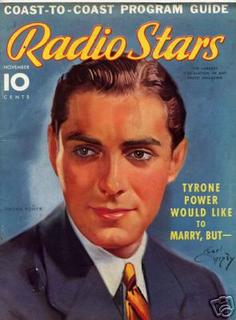
At it's peak radio was huge. There were dozens of magazines devoted to radio. Not trade magazines like R&R... many of these were consumer-oriented magazines.
Radio Star, What's on the air, Radio Magazine, Radio News, Radio Broadcast, QST, Radio Call book, Radio Amateur, Tower Radio, Radio Engineering, Radio, Wireless Age, Radio Home, Radio Review, Radio Craft, Radio times, Electric Radio, New Jersey radio, Radio Guide, Radio Index, "Popular Electronics" was also very popular, while it wasnt' exclusively radio related, it covered a lot of radio. Great article here; http://www.arrl.org/news/features/2004/05/07/1/
As media obsesses on other media now we have a glut of magazines focused on computer technology including Wired, PC magazine and many others. History repeats itself. Some more covers are archived here: http://www.hvra.org/magcover.htm
Today we are served information and entertainment via an absolute glut of media sources: webcasts, podcasts, streaming video, DVDs, CDs, HD radio, satellite radio, ipods and a general over-supply of media sources. For the consumer thsi is great. All platforms pander to us continually trying to win customers. You can download songs for 99 cents (or often for free) Cable TV is cheap when bundled with DSL, and/or phone, and netflix gives you unlimited DVD rentals by mail for like ten bucks...In the face of this it can be difficult to remember how big radio was in its golden era. Media has a great propensity for self-interest. newspapers write about radio, radio talks about TV, TV talks up a news article... and its always been this way.
At it's peak radio was huge. There were dozens of magazines devoted to radio. Not trade magazines like R&R... many of these were consumer-oriented magazines.
Radio Star, What's on the air, Radio Magazine, Radio News, Radio Broadcast, QST, Radio Call book, Radio Amateur, Tower Radio, Radio Engineering, Radio, Wireless Age, Radio Home, Radio Review, Radio Craft, Radio times, Electric Radio, New Jersey radio, Radio Guide, Radio Index, "Popular Electronics" was also very popular, while it wasnt' exclusively radio related, it covered a lot of radio. Great article here; http://www.arrl.org/news/features/2004/05/07/1/
As media obsesses on other media now we have a glut of magazines focused on computer technology including Wired, PC magazine and many others. History repeats itself. Some more covers are archived here: http://www.hvra.org/magcover.htm
Labels:
radio news,
Radio Stars
Subscribe to:
Posts (Atom)